What Is Apparel Sourcing and How Does It Work? A Complete Guide to Garment Sourcing, Fashion Supply Chains, and Global Manufacturing Processes
December 6, 2025
High-Street Apparel Sourcing Strategy in 2026: A Complete Retail Guide
January 4, 2026
Key Insights
Apparel sourcing is a system, not a single activity. Brands that treat it as a structured process outperform those that treat it as ad hoc buying.
Supplier selection is a risk management exercise as much as a cost exercise. Factory capability, compliance maturity, and financial stability matter as much as price.
Bangladesh apparel sourcing remains strategically critical for global fashion brands due to scale, specialization, and cost efficiency, but only when managed with disciplined oversight.
Apparel sourcing agents and fashion sourcing companies reduce execution risk, compress timelines, and improve compliance outcomes when properly integrated into the sourcing model.
Quality control and compliance must be embedded into the sourcing process from day one, not inspected at the end.
Table of contents
ShowHide- Key Insights
- Executive Summary
- What Is Apparel Sourcing?
- Apparel Sourcing vs Garment Manufacturing
- Why Apparel Sourcing Has Become a Board Level Issue
- Phase 1: Product Development and Tech Pack Creation
- Phase 2: Supplier Identification and Longlisting
- Phase 3: Costing, RFQs, and Commercial Negotiation
- Phase 4: Sampling and Product Validation
- Phase 5: Production Planning and Order Placement
- Phase 6: Manufacturing Execution
- Phase 7: Quality Control and Assurance
- Phase 8: Compliance and Ethical Sourcing
- Phase 9: Logistics, Shipping, and Documentation
- Phase 10: Post Shipment Performance Review
- When Brands Should Use an Apparel Sourcing Agent
- How to Evaluate a Fashion Sourcing Company
- In-House Apparel Sourcing Teams
- Using an Apparel Sourcing Agent or Clothing Sourcing Agent
- Hybrid Sourcing Models
- Common Apparel Sourcing Service Fee Models
- What a Professional Fashion Sourcing Company Should Cover
- Governance and Transparency
- MOQ Strategy and Capacity Planning
- Multi-Factory Allocation Models
- Cost vs Speed vs Risk Trade-Offs
- Category-Wise Specialization
- Compliance Evolution and Current Reality
- Common Buyer Mistakes in Bangladesh Apparel Sourcing
- Frequent Failure Patterns
- Early Warning Signals
- Incoterms and Risk Allocation
- Payment Terms: LC, TT, and Hybrid Structures
- Lead Times, Chargebacks, and Claims
- Core Supplier KPIs
- Using Scorecards for Allocation Decisions
- Understanding AQL in Apparel Sourcing
- What is the difference between apparel sourcing and garment sourcing?
- Do I need an apparel sourcing agent?
- Is Bangladesh safe for apparel sourcing?
- How long does the apparel sourcing process take?
- What should I look for in a fashion sourcing company?
Executive Summary
Apparel sourcing is no longer a transactional activity focused solely on cost negotiation and factory placement. For global fashion brands, it has become a strategic discipline that directly determines speed to market, margin resilience, compliance exposure, and long term brand equity. As supply chains globalize and regulations tighten, brands must master a structured, repeatable, and risk controlled apparel sourcing process.
This guide provides a comprehensive, end to end explanation of apparel sourcing, garment sourcing, and apparel manufacturing sourcing for international fashion brands. It is written as an evergreen reference for sourcing managers, founders, buyers, and operations leaders who require clarity, depth, and commercial realism. The focus is practical execution, not theory.
The article covers the full sourcing lifecycle, from product development and supplier selection through manufacturing, quality control, compliance, logistics, and post shipment performance management. It also explains where apparel sourcing agents, clothing sourcing agents, and fashion sourcing companies add measurable value, particularly in complex markets such as Bangladesh apparel sourcing.
The objective is simple. To establish this resource as a definitive authority on apparel sourcing and fashion manufacturing processes for global brands.
Understanding Apparel Sourcing in the Modern Fashion Industry
What Is Apparel Sourcing?
Apparel sourcing refers to the structured process by which fashion brands identify, evaluate, contract, and manage manufacturers to produce garments at scale. It encompasses product development, supplier selection, costing, sampling, production management, quality control, compliance verification, and logistics coordination.
Unlike simple procurement, apparel sourcing is highly technical. Each product category introduces different machinery, skills, lead times, and compliance requirements. Knitwear, woven garments, denim, outerwear, lingerie, and activewear all require distinct sourcing strategies.
A professional apparel sourcing process aligns commercial objectives with operational reality. Cost targets must match achievable factory efficiencies. Delivery calendars must reflect material lead times and production capacity. Compliance standards must be verified continuously, not assumed.
Apparel Sourcing vs Garment Manufacturing
Garment manufacturing is the physical production of apparel inside factories. Apparel sourcing sits above manufacturing and orchestrates the entire ecosystem. It determines where manufacturing happens, under what conditions, at what cost, and with which risk controls.
Strong apparel sourcing enables brands to leverage global manufacturing capacity without directly owning factories. Weak sourcing exposes brands to delays, quality failures, compliance violations, and reputational damage.
Why Apparel Sourcing Has Become a Board Level Issue
Several forces have elevated apparel sourcing from an operational function to a strategic priority:
Compressed fashion cycles driven by fast fashion and digital retail
Rising regulatory scrutiny around labor standards, traceability, and sustainability
Cost volatility in raw materials, energy, and logistics
Increased consumer awareness of ethical manufacturing
Concentration of production in high risk geographies
In this environment, brands require sourcing models that are resilient, transparent, and scalable.
The End to End Apparel Sourcing Process
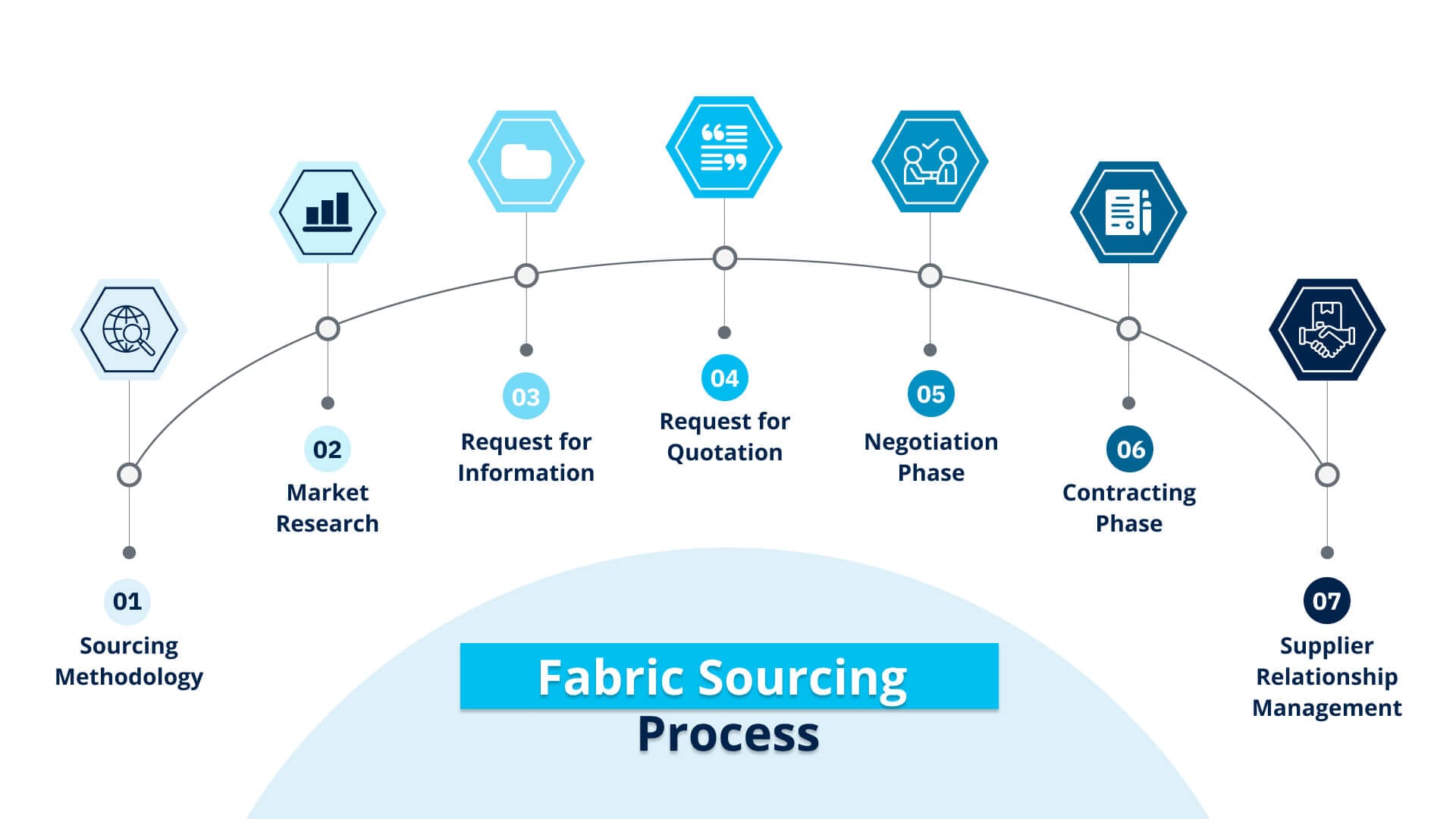
Phase 1: Product Development and Tech Pack Creation
Every successful apparel sourcing process begins with clear product definition. Factories do not manufacture ideas. They manufacture specifications.
Key inputs at this stage include:
Design sketches or CADs
Fabric specifications and fiber composition
Measurement charts and grading rules
Construction details and seam specifications
Labeling, packaging, and branding requirements
Target cost and delivery window
A complete and unambiguous tech pack is the single most important risk reduction tool in garment sourcing. Incomplete specifications lead to misinterpretation, re sampling, delays, and cost overruns.
Phase 2: Supplier Identification and Longlisting
Supplier identification converts product requirements into a shortlist of viable factories. This is where many brands fail by prioritizing price over capability.
Supplier evaluation criteria should include:
Product specialization and machinery alignment
Historical export experience with target markets
Compliance certifications and audit history
Production capacity and seasonality constraints
Financial stability and working capital strength
Communication capability and management professionalism
In Bangladesh apparel sourcing, for example, knitwear, woven bottoms, denim, and outerwear often require entirely different factory profiles.
Apparel sourcing agents and fashion sourcing companies add value here by maintaining pre vetted factory networks and real time capacity intelligence.
Phase 3: Costing, RFQs, and Commercial Negotiation
Once a supplier shortlist is established, formal RFQs are issued based on finalized tech packs.
Professional garment sourcing cost analysis includes:
Fabric consumption and yield efficiency
Trim and accessory costing
Labor minute calculations
Overhead allocation
Compliance and testing costs
Packaging and ex factory terms
Negotiation should focus on total landed cost and risk allocation, not only CM price. Payment terms, sample charges, liability for defects, and delay penalties are equally material.
Phase 4: Sampling and Product Validation
Sampling validates the factory’s ability to translate specifications into physical garments.
Typical sampling stages include:
Development sample
Fit sample
Size set sample
Pre production sample
Salesman or photo sample where applicable
Each sample stage should have documented approval criteria and revision tracking. Sampling delays are a leading indicator of production risk.
Phase 5: Production Planning and Order Placement
Once samples are approved, purchase orders are issued and production planning begins.
Key activities include:
Line booking and capacity confirmation
Fabric and trim procurement
Production scheduling against critical path
Pre production meetings to align expectations
Professional apparel sourcing processes use time and action calendars to track every milestone from material ordering to shipment.
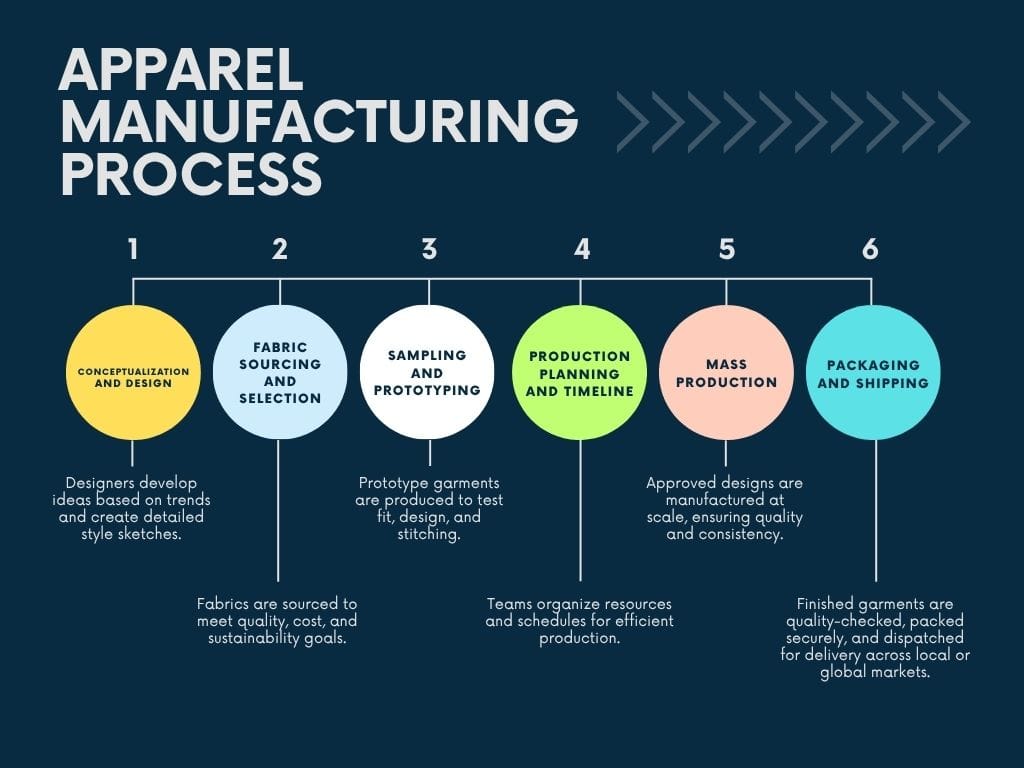
Phase 6: Manufacturing Execution
Manufacturing execution converts plans into output. It includes cutting, sewing, finishing, and packing.
Critical risk points include:
Fabric shade variation
Cutting accuracy and wastage
Sewing line efficiency
In line quality consistency
Finishing defects
Brands sourcing at scale should implement inline inspections rather than relying solely on final inspections.
Phase 7: Quality Control and Assurance
Quality control is not a single inspection. It is a system.
Typical QC stages include:
Pre production audit
Inline inspection
Mid line inspection
Final random inspection
Pre shipment inspection
Acceptance criteria should be defined using AQL standards appropriate to the product category and brand positioning.
Phase 8: Compliance and Ethical Sourcing
Compliance is central to modern apparel sourcing. Buyers are legally and reputationally accountable for their supply chains.
Core compliance areas include:
Labor standards and working hours
Health and safety conditions
Fire and building safety
Environmental management
Chemical handling and restricted substances
Common frameworks include Sedex, BSCI, WRAP, and brand specific codes of conduct.
In Bangladesh apparel sourcing, compliance oversight is non negotiable due to historical and regulatory scrutiny.
Phase 9: Logistics, Shipping, and Documentation
Post production execution includes:
Packing and cartonization
Container planning
Export documentation
Customs clearance coordination
Shipment tracking
In co-terms, lead time buffers, and contingency planning are critical at this stage.
Phase 10: Post Shipment Performance Review
Elite sourcing organizations close the loop through structured post shipment reviews.
Metrics include:
On time delivery performance
Quality rejection rates
Cost variance analysis
Compliance incident tracking
Supplier responsiveness
This data informs future supplier allocation and long term sourcing strategy.
The Role of Apparel Sourcing Agents and Fashion Sourcing Companies
When Brands Should Use an Apparel Sourcing Agent
Apparel sourcing agents and clothing sourcing agents act as on the ground extensions of the brand.
They are particularly valuable when:
Sourcing in unfamiliar geographies
Managing multi factory programs
Requiring rapid scale up
Operating lean internal teams
A professional apparel sourcing service provides factory access, production oversight, quality control, and compliance monitoring under a single accountability framework.
How to Evaluate a Fashion Sourcing Company
Key evaluation criteria include:
Depth of factory network
In house technical capability
QC and compliance infrastructure
Commercial transparency
Alignment with brand values
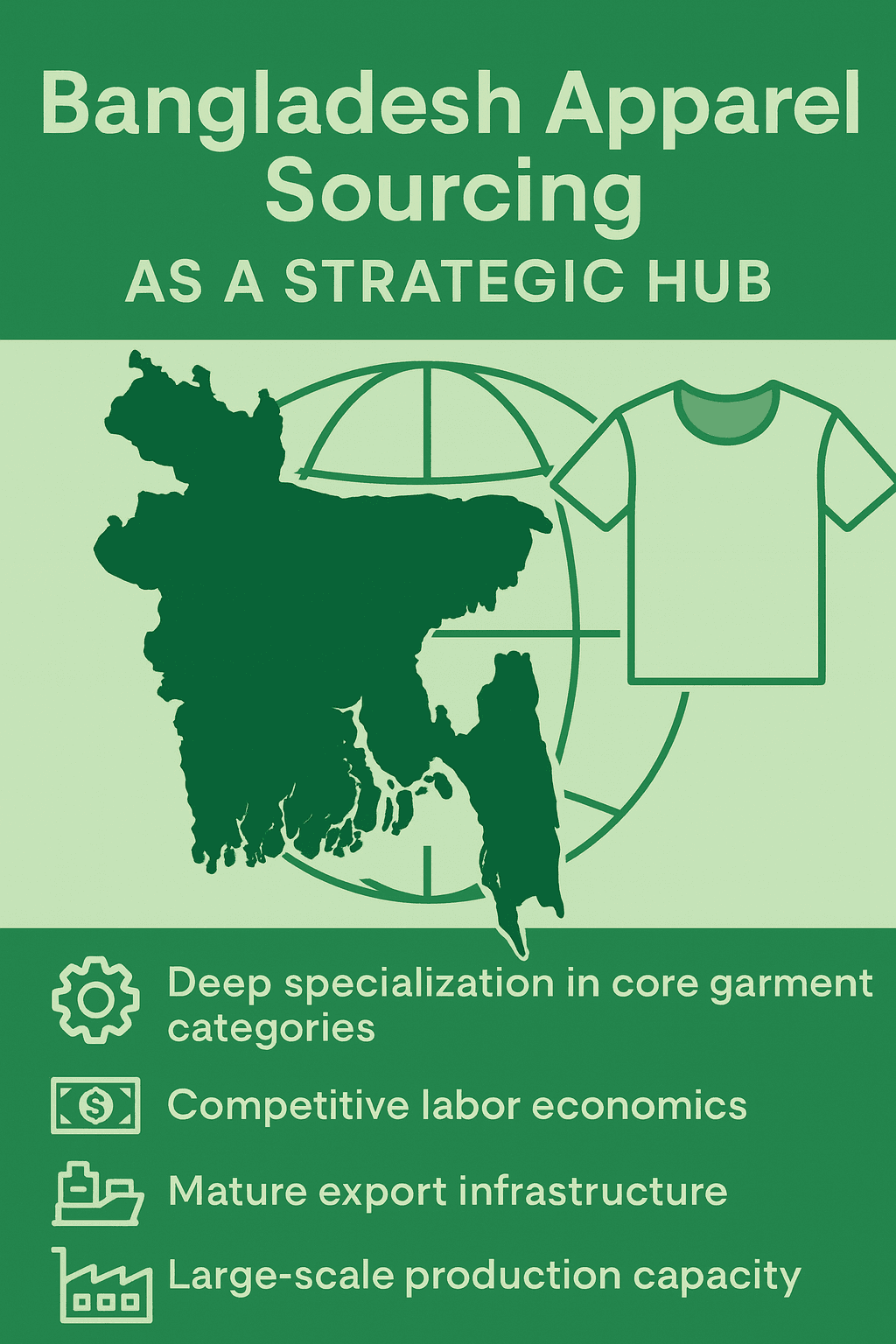
Bangladesh Apparel Sourcing as a Strategic Hub
Bangladesh remains one of the most important apparel manufacturing sourcing destinations globally.
Key advantages include:
Deep specialization in core garment categories
Competitive labor economics
Mature export infrastructure
Large scale production capacity
However, success requires disciplined sourcing governance, compliance rigor, and experienced local execution.
Apparel Sourcing Agent vs In-House Sourcing Models
As fashion brands scale, one of the most critical strategic decisions is whether to manage apparel sourcing in-house or partner with an external apparel sourcing agent or fashion sourcing company. There is no universally correct model. The right choice depends on scale, complexity, risk tolerance, and internal capability.
In-House Apparel Sourcing Teams
In-house sourcing teams give brands direct control over supplier relationships, cost negotiations, and production decisions. This model is typically adopted by larger brands with consistent order volumes and sufficient internal resources.
Advantages
Full visibility and direct factory relationships
Greater control over long-term supplier development
Institutional knowledge retained within the company
Limitations
High fixed costs in staffing, travel, and compliance oversight
Slower market entry in new sourcing countries
Limited flexibility during volume fluctuations
In-house models work best when sourcing geographies, product categories, and compliance frameworks are already well established.
Using an Apparel Sourcing Agent or Clothing Sourcing Agent
An apparel sourcing agent acts as an operational extension of the brand, managing factory selection, production execution, quality control, and compliance on the buyer’s behalf.
Advantages
Faster access to vetted factories
Reduced execution and compliance risk
Local presence in manufacturing markets
Lower fixed cost structure
Limitations
Dependency on third-party performance
Requires strong governance and transparency
Quality varies significantly between agents
For brands sourcing in markets such as Bangladesh, where on-the-ground oversight is essential, experienced apparel sourcing agents often deliver superior outcomes compared to lean in-house teams.
Hybrid Sourcing Models
Many global fashion brands adopt a hybrid model, maintaining a small strategic sourcing team in-house while outsourcing execution to regional sourcing partners. This approach combines strategic control with operational efficiency and is increasingly common among mid-sized and fast-growing brands.
How Apparel Sourcing Services Are Structured Commercially
Understanding how apparel sourcing services are priced and structured is essential for evaluating sourcing partners objectively.
Common Apparel Sourcing Service Fee Models
Commission-Based Model
Typically 3 to 8 percent of FOB value
Aligns agent incentives with order volume
May encourage volume over optimization if poorly governed
Retainer-Based Model
Fixed monthly or annual fee
Better suited for complex or development-heavy programs
Requires clear scope definition
Hybrid Model
Lower commission combined with base retainer
Balances incentive alignment with service stability
What a Professional Fashion Sourcing Company Should Cover
A credible apparel sourcing service should clearly define responsibility across:
Factory sourcing and qualification
Costing and negotiation
Sampling and development coordination
Production management
Quality control and inspections
Compliance monitoring
Shipment coordination
Lack of clarity around accountability is a common red flag in sourcing service agreements.
Governance and Transparency
Brands should require:
Written SOPs
Inspection reports and production updates
Clear escalation paths
Defined liability for quality and compliance failures
Apparel sourcing is operationally complex. Professional governance separates strategic partners from intermediaries.
Advanced Apparel Manufacturing Sourcing Considerations
Beyond basic factory placement, advanced apparel manufacturing sourcing requires balancing cost, capacity, speed, and risk.
MOQ Strategy and Capacity Planning
Minimum order quantities vary significantly by product category and factory type. Brands that ignore MOQ realities often face delays or hidden cost premiums.
Key considerations include:
Core styles vs seasonal programs
Capacity reservation during peak seasons
Balancing factory loyalty with flexibility
Multi-Factory Allocation Models
Relying on a single factory increases risk exposure. Mature sourcing organizations allocate production across multiple factories based on:
Product specialization
Capacity availability
Compliance performance
Historical delivery reliability
This approach improves resilience and negotiating leverage.
Cost vs Speed vs Risk Trade-Offs
The lowest cost sourcing option is rarely the optimal one. Brands must actively manage trade-offs between:
FOB price
Lead time
Quality consistency
Compliance exposure
Strategic apparel sourcing optimizes the full equation, not a single variable.
Bangladesh Apparel Sourcing Deep Dive
Bangladesh apparel sourcing plays a central role in global fashion supply chains due to its scale, specialization, and cost competitiveness.
Category-Wise Specialization
Bangladesh excels in:
Knitwear and jersey products
Woven bottoms and shirts
Denim manufacturing
Large-volume basic programs
Understanding factory specialization is critical. Not all Bangladeshi factories are interchangeable.
Compliance Evolution and Current Reality
Following increased global scrutiny, Bangladesh has seen substantial improvements in:
Building and fire safety
Compliance auditing frameworks
Worker safety protocols
However, compliance standards still vary widely between factories. Continuous monitoring remains essential.
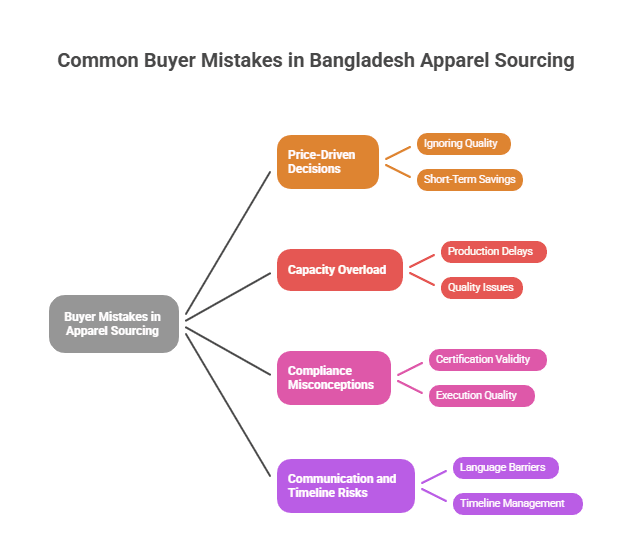
Common Buyer Mistakes in Bangladesh Apparel Sourcing
Selecting factories solely on price
Overloading capacity during peak seasons
Assuming compliance certifications guarantee execution quality
Underestimating communication and timeline risks
Brands that succeed in Bangladesh combine cost advantages with disciplined sourcing governance.
Common Apparel Sourcing Failures and How to Avoid Them
Even experienced brands encounter sourcing failures. Most are predictable and preventable.
Frequent Failure Patterns
Incomplete tech packs leading to production errors
Overreliance on final inspections
Poor alignment between merchandising and sourcing calendars
Weak escalation mechanisms
Early Warning Signals
Repeated sampling delays
High defect rates during inline inspections
Inconsistent communication from suppliers
Resistance to transparency
Early intervention prevents small issues from becoming systemic failures.
Commercial Mechanics Deep Dive in Apparel Sourcing
Commercial mechanics sit at the core of successful apparel sourcing, yet they are often underexplored in generic sourcing guides. For global fashion brands, understanding how commercial terms interact with operational risk is critical.
Incoterms and Risk Allocation
Incoterms define where responsibility, cost, and risk transfer from supplier to buyer. In apparel sourcing, the most common terms include EXW, FOB, and CIF.
EXW (Ex Works) places maximum responsibility on the buyer and is rarely advisable unless the buyer has strong local logistics control.
FOB (Free On Board) is the most widely used term in apparel sourcing, balancing cost transparency with manageable risk.
CIF (Cost, Insurance, Freight) offers simplicity but often hides cost inefficiencies and limits buyer control.
Professional sourcing organizations prefer FOB structures combined with buyer-controlled freight and insurance to maintain visibility and leverage.
Payment Terms: LC, TT, and Hybrid Structures
Payment terms significantly impact factory behavior and buyer risk.
Letters of Credit (LCs) remain the gold standard for large-volume programs, offering risk mitigation for both parties but requiring administrative discipline.
Telegraphic Transfer (TT) is common for smaller brands and sampling but increases buyer exposure when poorly governed.
Hybrid models such as partial advance with balance against documents are frequently used to balance cash flow and risk.
Misaligned payment terms often correlate with delivery delays and quality disputes.
Lead Times, Chargebacks, and Claims
Lead times must account for material procurement, capacity loading, and contingency buffers. Unrealistic calendars increase failure probability.
Chargeback and claims mechanisms should be contractually defined for:
Late delivery
Quality non-conformance
Compliance breaches
Without enforceable commercial consequences, sourcing discipline erodes over time.
Supplier Scorecard and KPI Framework
Elite apparel sourcing organizations manage suppliers using structured performance scorecards rather than anecdotal feedback.
Core Supplier KPIs
A robust supplier scorecard typically includes:
On-Time Delivery (OTD): Percentage of orders shipped within the agreed window.
Quality PPM or Defect Rate: Quantitative measure of defects per unit inspected.
Audit Scores: Latest social, safety, and environmental audit outcomes.
CAP Closure Rate: Speed and effectiveness of corrective action implementation.
These metrics enable objective comparison across factories and sourcing regions.
Using Scorecards for Allocation Decisions
Supplier performance data should directly influence:
Order allocation
Volume scaling
Long-term partnership status
Factories with consistent performance earn stability and volume. Underperforming suppliers are either developed or exited.
Scorecards transform sourcing from reactive firefighting into proactive portfolio management.
Quality Control System Expansion
Quality control is not a checkpoint. It is a system embedded throughout the apparel sourcing lifecycle.
Understanding AQL in Apparel Sourcing
Acceptable Quality Level (AQL) defines the maximum acceptable number of defects in a sample batch. Common standards include:
AQL 2.5 for major defects
AQL 4.0 for minor defects
However, AQL is a statistical tool, not a quality strategy. Overreliance on final AQL inspections masks upstream process failures.
Frequently Asked Questions About Apparel Sourcing
What is the difference between apparel sourcing and garment sourcing?
Apparel sourcing refers to the full strategic and operational process, including supplier selection, compliance, quality control, and logistics. Garment sourcing often refers more narrowly to factory placement and order execution.
Do I need an apparel sourcing agent?
Brands sourcing in complex or unfamiliar markets, managing multiple factories, or operating lean internal teams often benefit significantly from working with an experienced apparel sourcing agent.
Is Bangladesh safe for apparel sourcing?
Bangladesh is a mature and essential apparel sourcing destination when managed with proper compliance oversight, factory selection discipline, and on-the-ground monitoring.
How long does the apparel sourcing process take?
From product development to shipment, the apparel sourcing process typically ranges from 90 to 180 days, depending on product complexity, sourcing location, and seasonality.
What should I look for in a fashion sourcing company?
Key indicators include factory network depth, technical capability, quality control systems, compliance infrastructure, transparency, and alignment with your brand’s values and growth strategy.
Key Takeaways
Treat apparel sourcing as a strategic system, not a purchasing task.
Invest in upfront clarity through robust tech packs and supplier evaluation.
Embed quality and compliance throughout the process.
Use apparel sourcing agents to reduce execution risk in complex markets.
Build long term supplier partnerships based on performance data, not price alone.
If your brand is seeking a reliable apparel sourcing partner with access to Tier 1 and mid-tier factories in Bangladesh, Epsilon Global Sourcing provides:
End to end apparel sourcing service
Factory capability matching
Transparent costing breakdown
Compliance and audit oversight
Multi stage quality control
LC and documentation handling
Production tracking and reporting
Contact us to discuss your sourcing needs and strengthen your supply chain with a high performing Bangladesh apparel sourcing team.