The True Cost of Apparel Sourcing: A Full Breakdown
January 16, 2026
The Strategic Guide to Building a Resilient Apparel Supplier Portfolio
February 16, 2026
Executive Summary
Apparel sourcing remains one of the most misunderstood and underestimated disciplines in the global fashion industry. While many brands treat sourcing as a transactional exercise focused on unit price negotiation, practitioners who operate inside the supply chain understand that sourcing is a complex system involving commercial risk management, compliance governance, production engineering, human behavior, and geopolitical realities.
The majority of sourcing failures do not occur because factories lack capability. They occur because buyers fail to design, control, and govern the apparel sourcing process correctly.
This article addresses apparel sourcing pitfalls from an operator’s perspective, not from a theoretical or academic standpoint. It draws on real-world sourcing scenarios across fashion sourcing, garment sourcing, and apparel manufacturing sourcing, with particular emphasis on Bangladesh apparel sourcing, where scale, compliance, and execution discipline separate successful buyers from those who incur chronic quality, delay, and reputational risk.
The objective is not to provide generic best practices. The objective is to explain why sourcing fails at a structural level, how those failures manifest commercially, and what disciplined buyers do differently to prevent them. This is written for decision makers who control supplier selection, production allocation, and sourcing governance, not for those looking for superficial checklists.
Key Insights
Most apparel sourcing failures originate at the buyer interface, not inside the factory.
Price-led supplier selection is the single largest driver of quality, compliance, and delivery risk.
Apparel sourcing agents fail when they are treated as brokers rather than operational extensions of the buyer.
Bangladesh apparel sourcing succeeds when production engineering and compliance are embedded upstream, not audited downstream.
A robust apparel sourcing process must be designed as a control system, not a vendor list.
Table of contents
ShowHide- Executive Summary
- Understanding the True Scope of Apparel Sourcing
- The Most Common Apparel Sourcing Pitfalls
- The Role of the Apparel Sourcing Agent
- Compliance as a Commercial Variable
- Real-Life Commercial Example: Bangladesh Apparel Sourcing Failure
- Building a Resilient Apparel Sourcing Process
- Bangladesh Apparel Sourcing: Strategic Considerations
- Buyer-Focused Takeaway
Understanding the True Scope of Apparel Sourcing
Apparel Sourcing Is Not Vendor Identification
One of the most damaging misconceptions in fashion sourcing is the belief that apparel sourcing equals "finding factories." In practice, factory identification is the smallest and least complex part of the process. The real work begins after a factory is selected.
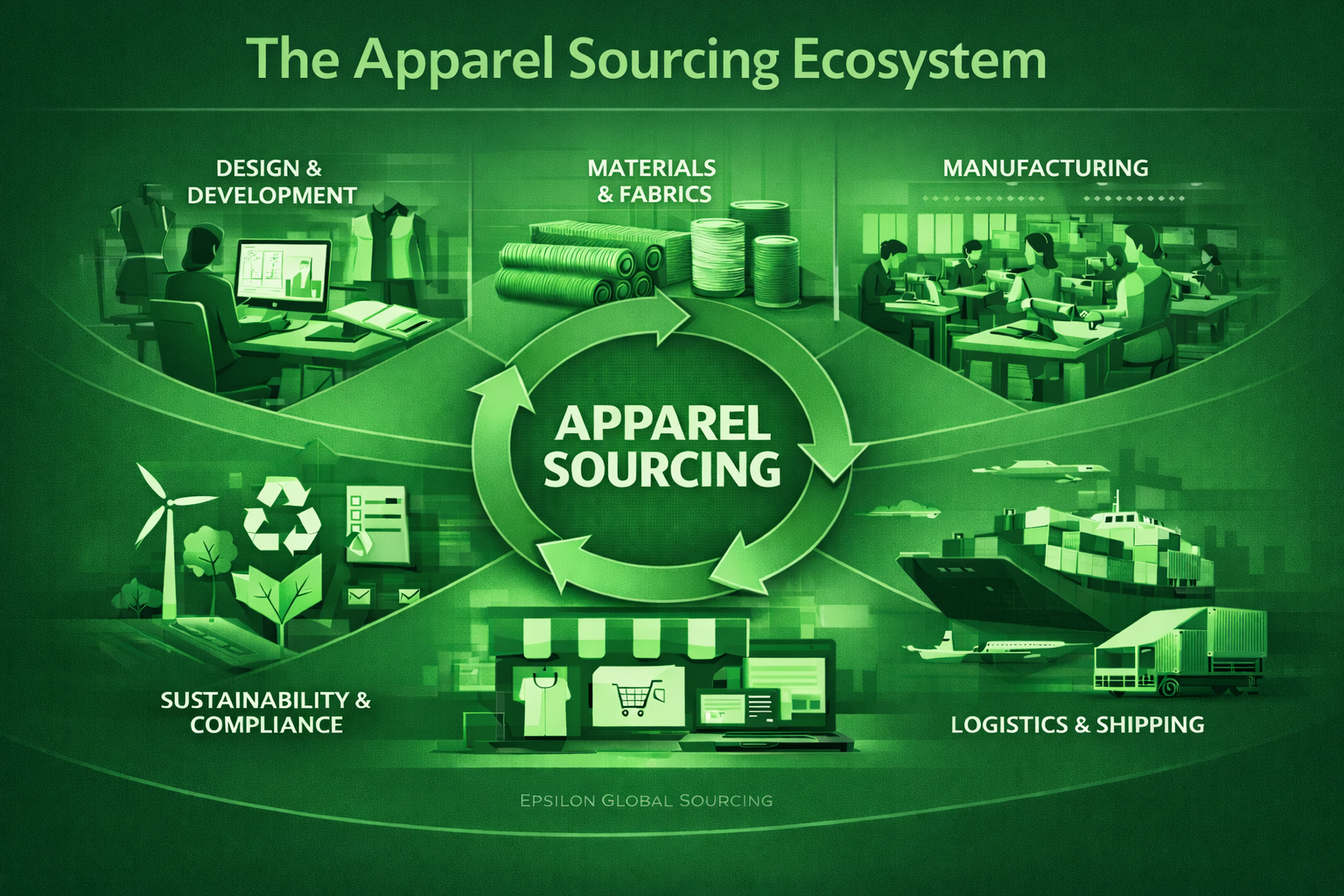
Apparel sourcing encompasses:
Product feasibility analysis.
Cost architecture validation.
Compliance risk mapping.
Production capacity planning.
Raw material synchronization.
Quality control protocol design.
Delivery risk mitigation.
When any of these elements are underdeveloped, the sourcing outcome degrades regardless of how capable the factory may be. Many brands mistakenly outsource responsibility for these disciplines to a clothing sourcing agent or fashion sourcing company without defining authority, accountability, or escalation thresholds. This creates a structural gap where no party truly owns the outcome.
Why Brands Oversimplify Apparel Manufacturing Sourcing
Oversimplification occurs for three structural reasons:
Talent Gap: Many buyers enter sourcing roles from merchandising or design backgrounds and lack operational manufacturing exposure.
Commercial Myopia: Pressure to reduce costs encourages shortcuts in due diligence.
Misaligned Incentives: Sourcing is often evaluated on short-term cost savings rather than long-term execution reliability.
As a result, sourcing decisions are frequently made without understanding how garment construction complexity, fabric behavior, or compliance standards affect production feasibility at scale. This disconnect is particularly visible in Bangladesh apparel sourcing, where factories can technically produce almost any product, but not always at the price, lead time, or quality assumptions imposed by buyers.
The Most Common Apparel Sourcing Pitfalls
Pitfall One: Price-Driven Supplier Selection
Price-driven sourcing is not cost optimization. It is risk transfer disguised as savings.
When buyers select suppliers primarily on quoted price, they inadvertently incentivize factories to:
Under-resource production lines.
Downgrade inputs (trims/packaging).
Compress lead times beyond operational feasibility.
Subcontract to unapproved units.
This leads to hidden cost leakage through rework, air freight, claim disputes, and missed market windows. In garment sourcing, price must be evaluated in relation to construction complexity, fabric yield, compliance overhead, and capacity utilization.
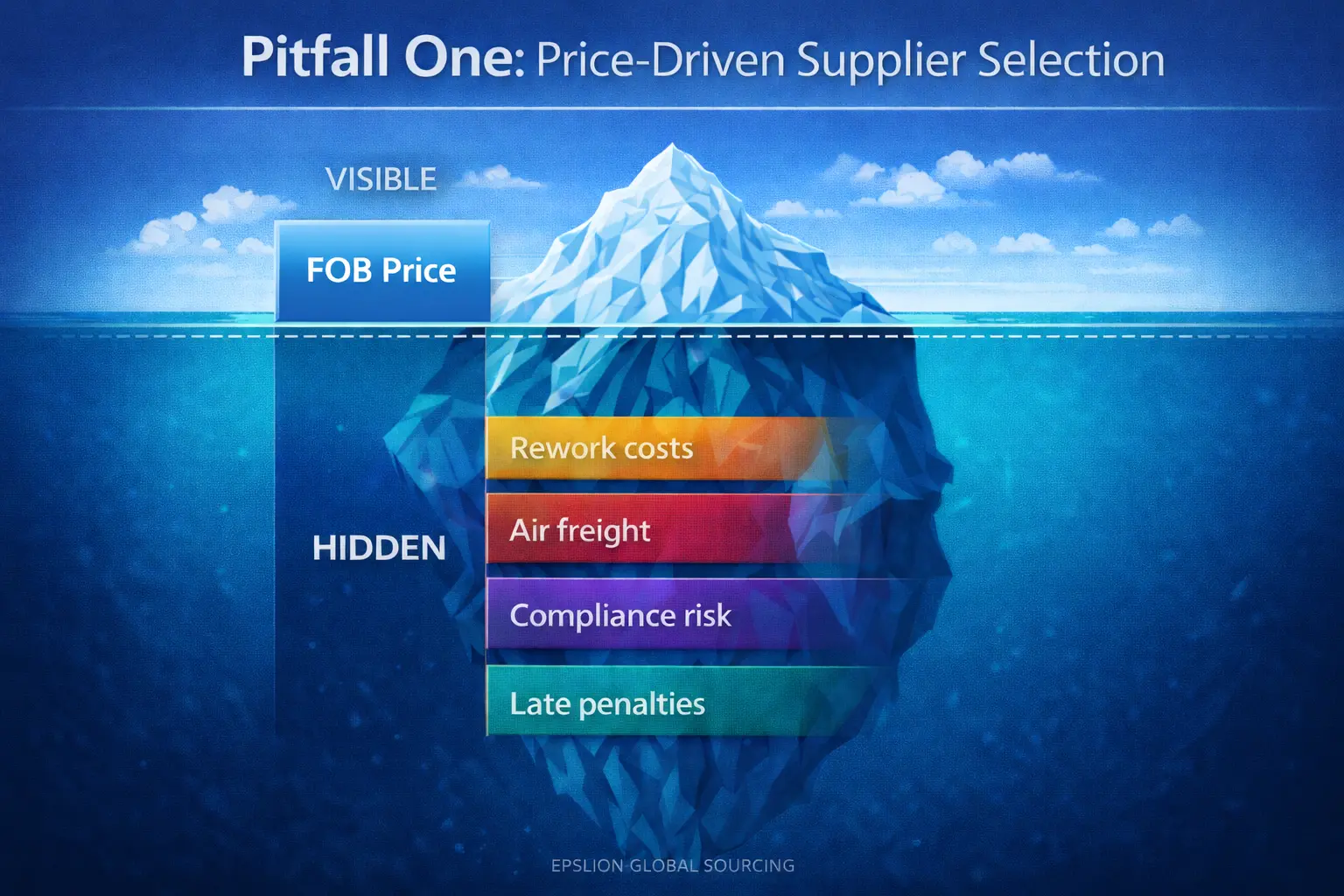
This visualizes the key argument that the lowest unit price is rarely the lowest total cost.
A low price from a factory operating at 95 percent capacity is not cheaper than a higher price from a factory operating at 70 percent capacity. The former carries significantly higher delivery risk.
Why This Pitfall Persists This pitfall persists because sourcing KPIs are often misaligned. Buyers are rewarded for cost reductions but penalized for delivery failures only after the damage occurs. Apparel sourcing agents are then expected to “fix” problems that were structurally created by commercial decisions upstream.
Pitfall Two: Inadequate Factory Capability Assessment
Factory audits are frequently mistaken for capability assessments. In reality, social compliance audits confirm baseline ethical standards, not production competence.
A factory may pass BSCI, SEDEX, or WRAP audits and still be incapable of executing a specific product category at scale. Apparel manufacturing sourcing requires category-specific capability mapping, including:
Machine configuration (e.g., auto-cutters vs. manual spreading).
Operator skill distribution (efficiency on complex operations).
Historical defect patterns (what usually goes wrong?).
For example, a factory strong in basic knitwear may struggle with structured outerwear, even if both fall under the same compliance certification. Without granular capability assessment, buyers allocate styles to factories that are technically compliant but operationally misaligned.
The Bangladesh Context In Bangladesh apparel sourcing, the factory ecosystem is highly stratified. World-class vertically integrated factories operate alongside smaller units with limited engineering depth. Treating Bangladesh as a monolithic sourcing destination is a fundamental error.
Capability assessment must be conducted at the production line level, not at the corporate profile level. Failure to do so leads to inconsistent quality, unstable lead times, and excessive dependency on factory management improvisation.

A modern, clean, high-tech garment factory floor
Pitfall Three: Weak Apparel Sourcing Process Design
Many brands operate without a formally defined apparel sourcing process. Instead, they rely on institutional memory, individual experience, or ad hoc decision making.
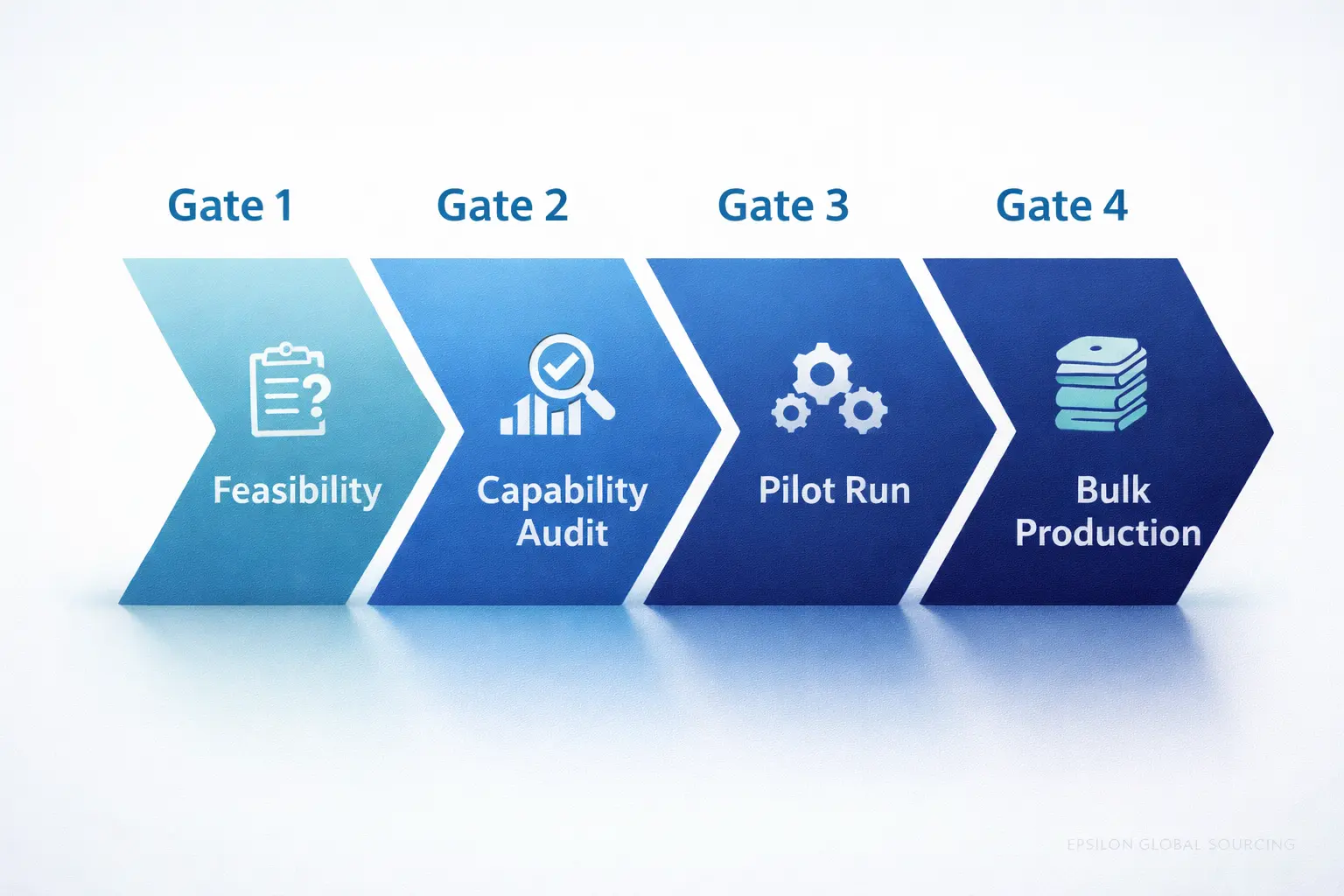
A robust apparel sourcing process defines decision gates, documentation standards, escalation protocols, and approval authority at each stage. Without this structure, errors propagate silently until they manifest as shipment delays or quality failures.
Key process failures include:
Incomplete tech packs.
Unrealistic sample timelines.
Ambiguous tolerance standards.
Undefined responsibility for raw material booking.
These are not factory failures. They are process design failures.
Why Process Discipline Matters In fashion sourcing, variability is inevitable. What distinguishes high-performing sourcing organizations is not the absence of problems, but the speed and discipline with which they are identified and resolved. Process discipline enables early detection of feasibility issues before production is committed. Without it, brands discover problems when corrective action is no longer commercially viable.
Pitfall Four: Ignoring Raw Material Synchronization
Note: Expanded Section A critical, often overlooked pitfall is the misalignment between fabric availability and sewing capacity.
Buyers frequently book factory space based on "estimated" fabric arrival dates. When fabric mills delay shipment (a common occurrence in global textiles), the sewing slot is lost. The factory, needing to keep lines running, fills that slot with another order. When the fabric finally arrives, the factory has no capacity left.
This creates a "Queue Jumping" effect where an order is delayed by weeks simply because it missed its specific entry window by two days. Effective sourcing requires synchronizing the Critical Path of raw materials with the finite capacity planning of the factory.
The Role of the Apparel Sourcing Agent
Broker Versus Operator Models
Not all apparel sourcing agents operate the same way. The most dangerous model is the broker model, where the agent facilitates introductions and negotiates prices but does not control production execution.
In this model, accountability is fragmented. The factory blames the buyer’s specifications. The buyer blames the agent’s oversight. The agent blames the factory’s performance. No party owns the outcome.
An effective apparel sourcing service operates as an extension of the buyer’s sourcing function. This includes:
Production planning.
Inline quality control (DUPRO).
Compliance monitoring.
Shipment coordination.
Authority must match responsibility.
When Clothing Sourcing Agents Fail
Clothing sourcing agents fail when they are incentivized solely on order volume or commission. This encourages overcommitment, underreporting of risk, and tolerance of marginal suppliers.
In Bangladesh apparel sourcing, this dynamic is particularly risky due to high factory utilization rates during peak seasons. Agents who lack authority to reject orders or reallocate production become passive observers rather than risk managers.
Compliance as a Commercial Variable
Compliance Is Not a Box-Ticking Exercise
Compliance failures are often treated as reputational risks rather than commercial risks. This is a fundamental miscalculation.
Non-compliance disrupts production schedules, triggers corrective action plans, and exposes buyers to shipment holds and order cancellations. In apparel manufacturing sourcing, compliance directly affects capacity availability and cost predictability.
In Bangladesh, where regulatory scrutiny is high, compliance lapses can shut down production lines overnight. Buyers who treat compliance as an afterthought inevitably face unplanned disruption.
Integrating Compliance into Sourcing Strategy
Effective fashion sourcing integrates compliance assessment into supplier selection and production planning. This includes understanding remediation timelines, audit validity periods, and buyer-specific compliance requirements.
Factories should not be approved as binary entities (Pass/Fail). Approval should be conditional and scope-specific, aligned to product category and order volume.
Real-Life Commercial Example: Bangladesh Apparel Sourcing Failure
A mid-sized European fashion brand shifted 40 percent of its sourcing volume to Bangladesh to reduce costs. Factory selection was driven by price and audit status, with limited production engineering review.
Initial samples were approved with minor concessions. Bulk production commenced during peak season. Midway through production, quality issues emerged related to fabric shrinkage and seam slippage. The factory attempted corrective action without notifying the buyer to avoid penalties.
By the time the issue surfaced:
60 percent of the order was complete.
Rework was not feasible within the delivery window.
The brand air-freighted part of the order and discounted the remainder.
The Result: The anticipated cost savings were completely eroded by logistics costs and markdowns.
Post-mortem analysis revealed that the fabric specification was marginal for the garment construction, and the factory lacked prior experience with that product category at scale. This failure was not caused by Bangladesh manufacturing capability. It was caused by flawed apparel sourcing decisions and inadequate process control.
Building a Resilient Apparel Sourcing Process
Upstream Feasibility Validation
Apart of having an established apparel supplier portfolio, resilient sourcing begins upstream with rigorous feasibility validation. This includes fabric testing under realistic conditions, construction risk analysis, and capacity planning based on seasonal load.
Feasibility validation must be conducted before price finalization. Negotiating price before confirming feasibility creates irreversible commercial pressure that distorts decision making.
Structured Production Governance
Production governance involves defining control points throughout the production lifecycle. This includes:
Pre-production meetings (PPM).
Pilot runs.
Inline inspections.
Final audits.
Governance structures must specify who has authority to stop production, approve deviations, and escalate risks. Without this clarity, problems are hidden rather than resolved.
Data-Driven Decision Making
Note: Expanded Section Modern sourcing cannot rely on "gut feeling." Resilient processes rely on data. This means tracking Supplier Performance Scorecards that measure:
On-Time In-Full (OTIF) rates.
First-Pass Yield (quality pass rates).
Sample submission accuracy.
Communication latency.
By quantifying these metrics, buyers move from emotional supplier selection ("I like this factory owner") to objective performance management.
Bangladesh Apparel Sourcing: Strategic Considerations
Understanding the Ecosystem
Bangladesh is one of the world’s most important apparel manufacturing hubs. Its competitive advantage lies in scale, workforce depth, and improving compliance infrastructure.
However, Bangladesh apparel sourcing requires nuanced understanding of factory segmentation, lead time dynamics, and regulatory context. Buyers who apply generic sourcing logic underperform in this market.
Long-Term Supplier Relationships
Short-term order placement undermines long-term performance. Factories prioritize buyers who offer volume predictability and technical collaboration.
Long-term relationships enable joint investment in process improvement, training, and capacity expansion. This reduces cost volatility and execution risk over time.
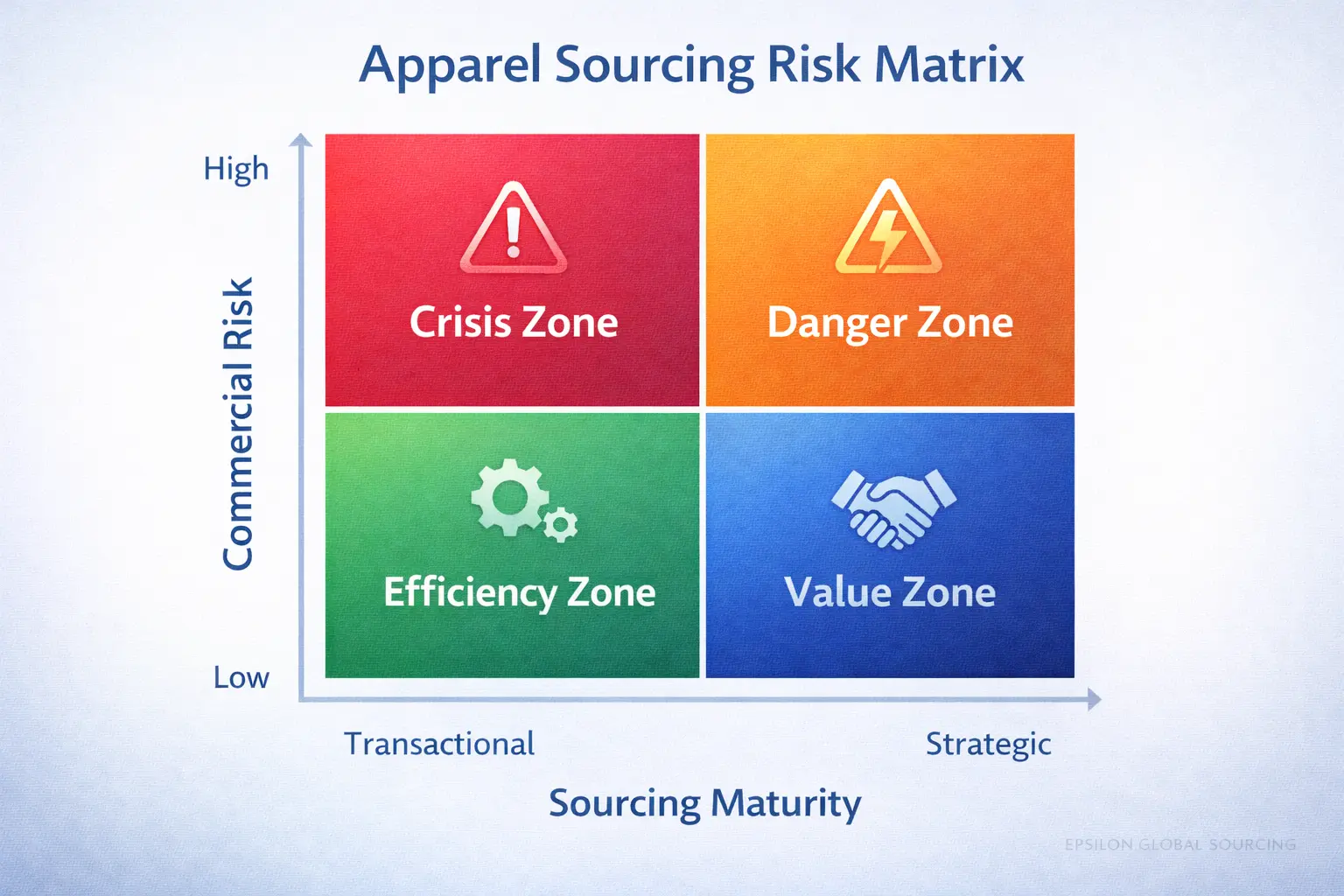
Buyer-Focused Takeaway
Apparel sourcing success is determined by structural discipline, not negotiation tactics. Buyers who treat sourcing as a strategic operating function outperform those who treat it as procurement.
Avoiding sourcing pitfalls requires redefining success metrics, empowering sourcing partners, and embedding operational control into every stage of the apparel sourcing process. This is not optional. It is the price of reliability in a volatile global supply chain.
Buyers who internalize this reality transform sourcing from a risk exposure into a competitive advantage.
If your brand is seeking a reliable apparel sourcing partner with access to Tier 1 and mid-tier factories in Bangladesh, Epsilon Global Sourcing provides:
End to end apparel sourcing service
Factory capability matching
Transparent costing breakdown
Compliance and audit oversight
Multi stage quality control
LC and documentation handling
Production tracking and reporting
Contact us to discuss your sourcing needs and strengthen your supply chain with a high performing Bangladesh apparel sourcing team.