The Complete Apparel Sourcing Process for Global Fashion Brands
December 15, 2025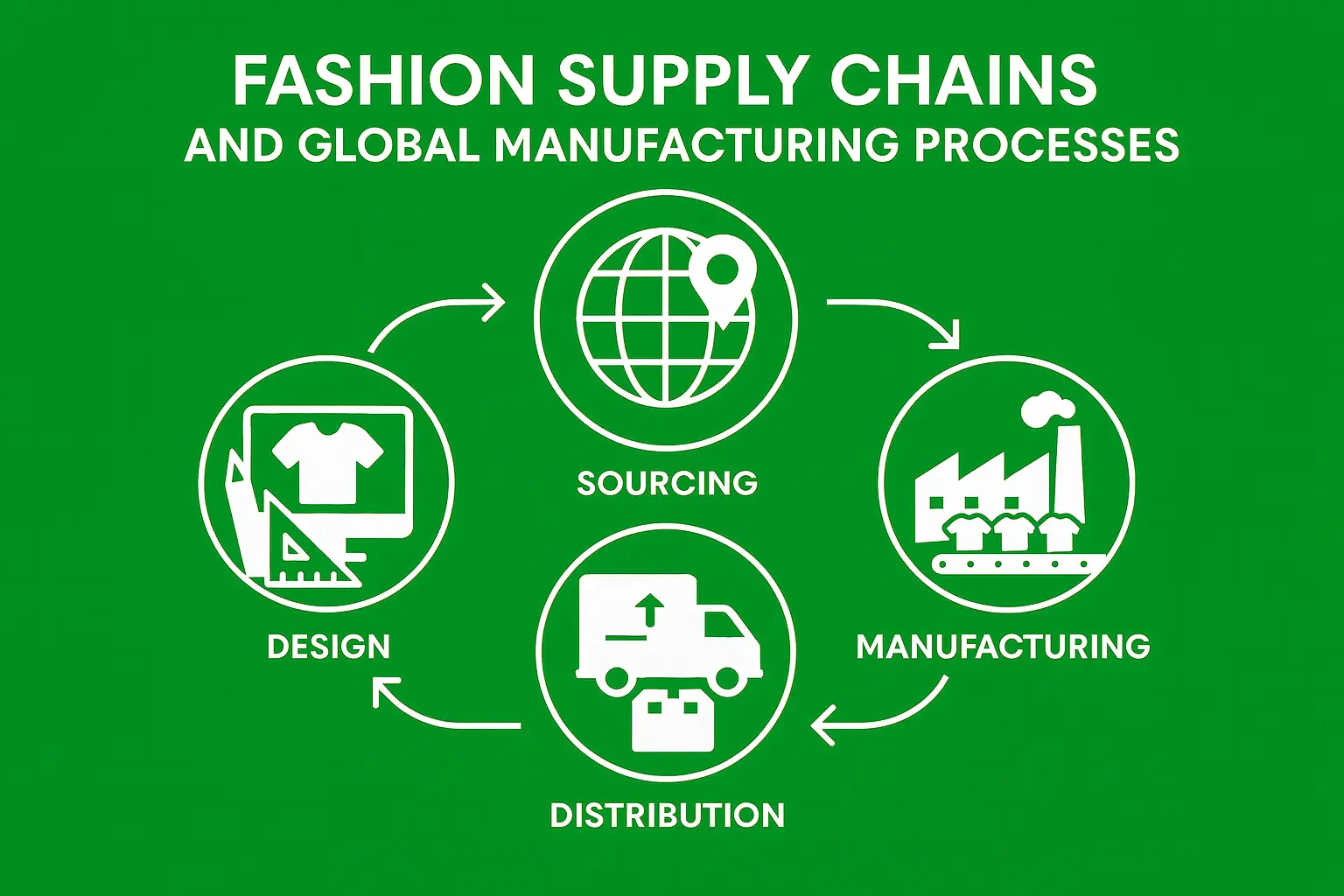
KEY INSIGHTS
- Apparel sourcing is a multi stage discipline combining technical, commercial, compliance, and logistics management across the entire production lifecycle.
- Bangladesh is one of the most advanced and cost competitive sourcing hubs due to vertical integration, scale, and compliance maturity.
- Transparent costing, rigorous compliance oversight, and staged quality control are the three pillars of reliable garment sourcing.
- Specialist apparel sourcing agents add commercial value by mitigating factory risk, improving cost visibility, managing QC, and handling LCs and documentation.
- Global brands increasingly require sustainable, traceable, and compliant supply chains, making structured sourcing processes essential.
Apparel sourcing is one of the most strategically important functions in the entire global fashion supply chain. It determines where and how a garment is produced, under what compliance standards, at what cost structure, and at what level of quality and reliability. For international brands, sourcing decisions influence gross margins, lead times, supply chain resilience, sustainability performance, and the ability to meet seasonal launches or rapid replenishment cycles.
During the past three decades, apparel sourcing has transformed from simple cost-driven supplier selection into a sophisticated discipline requiring technical proficiency, commercial negotiation expertise, compliance governance, and operational execution across multi-country supply networks. Today’s sourcing functions operate within a volatile global environment shaped by shifting production geographies, rising compliance expectations, raw material price fluctuations, logistics uncertainties, and the accelerating demand for transparent, ethical supply chains.
Bangladesh has emerged as one of the world’s most important apparel sourcing hubs. Its competitive cost base, vertically integrated mills, large factory capacities, advanced compliance ecosystem, and established expertise in knitwear, denim, and woven production have positioned it as a core partner for European, UK, US, Australian, and Latin American brands.
However, the success of any sourcing initiative depends not only on selecting the right country, but also on choosing the right factories, managing the end to end production lifecycle, and ensuring compliance, quality, timing, and cost control. This guide explains precisely how that lifecycle works.
The goal of this article is to provide the most comprehensive, evergreen reference available on the topic of apparel sourcing. It is written for sourcing directors, brand founders, production managers, technical teams, buyers, merchandisers, and supply chain strategists who require clarity, depth, and operational accuracy.
Throughout the guide, expert commentary from us, provide insight into how sourcing practitioners mitigate risk and manage factory relationships, including examples from Bangladesh.
The final section includes takeaways and recommended next steps for brands establishing or improving their sourcing operations.
This article is designed to serve as a definitive industry reference and a cornerstone piece for your apparel sourcing knowledge hub.
Table of contents
ShowHide- The Apparel Sourcing Process
- Types of Apparel Manufacturers
- Cost Structures in Apparel Sourcing. A Complete Breakdown
- Compliance Requirements in Apparel Sourcing
- Quality Control Across the Apparel Sourcing Lifecycle
- Sourcing Strategies for Modern Fashion Brands
- Why Bangladesh Is a Global Leader in Apparel Sourcing
- When Should a Brand Use an Apparel Sourcing Agent?
- The Future of Apparel Sourcing
- Key takeaways for Fashion and Apparel Brands
Understanding Apparel Sourcing: A Technical and Commercial Overview
Definition and Scope
Apparel sourcing refers to the structured process through which fashion brands identify, evaluate, select, and manage manufacturers to produce their products. It includes the complete lifecycle from concept to shipment:
Technical pack verification
Factory identification and capability matching
Compliance assessment (social, environmental, ethical)
Cost negotiation and financial structuring
Sample development and iteration
Production planning and capacity reservation
Inline and final quality control
Logistics coordination and documentation
Supplier evaluation and long term performance management
Apparel sourcing is not a single activity. It is an integrated system that spans technical, commercial, compliance, and operational domains.
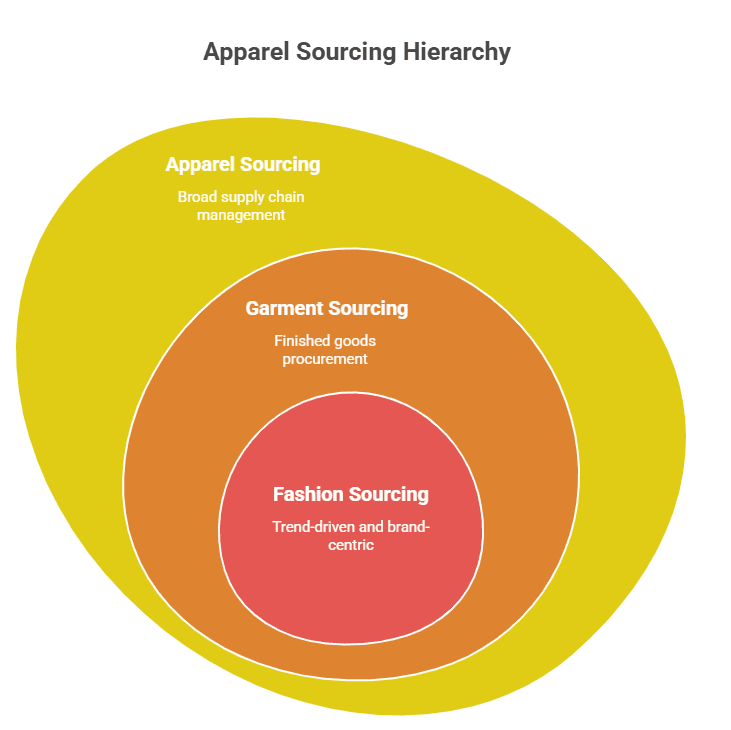
Apparel Sourcing vs Garment Sourcing vs Fashion Sourcing
Although used interchangeably, each term carries nuance.
| Term | Focus | Description |
|---|---|---|
| Apparel sourcing | Supply chain, factories, production | Broadest term. End to end sourcing across product categories. |
| Garment sourcing | Finished goods | Typically refers to sourcing completed garments rather than materials. |
| Fashion sourcing | Trend-driven and brand-centric | Strategy-driven sourcing aligned to seasonal collections and brand positioning. |
Why Brands Outsource Sourcing Functions
Most brands do not own factories. Even those with in-house technical or production teams rely on external sourcing partners because:
Factory ecosystems are specialised (denim, knitwear, outerwear, technicalwear, lingerie).
Compliance expectations are high and require ongoing governance.
Cost structures fluctuate based on raw materials, CM rates, capacity cycles, and freight.
Managing multiple countries requires expertise in regulations, capabilities, and risk.
Brands prefer variable overhead instead of fixed cost sourcing teams.
Outsourced sourcing partners or apparel sourcing agents provide:
Market intelligence
Factory access
Cost negotiation leverage
Compliance oversight
Quality governance
Production follow up
LC and documentation handling
For high street brands, mid-market retailers, and emerging DTC labels, these services materially reduce operational and supply chain risk.
The Economic Drivers Behind Sourcing Decisions
Sourcing is influenced by a matrix of economic and operational factors:
Cost of manufacturing (CM charges, overheads, factory margins)
Raw material availability (yarn, fabric, dyeing, trims, accessories)
Lead times (local mills vs imported fabric)
Minimum order quantities (MOQ feasibility)
Compliance standards required by the brand
Freight and logistics conditions
Currency fluctuations
Seasonal production cycles and capacity constraints
The optimal sourcing strategy balances cost, reliability, quality, speed, and compliance.
The Apparel Sourcing Process
End to End Operational Framework
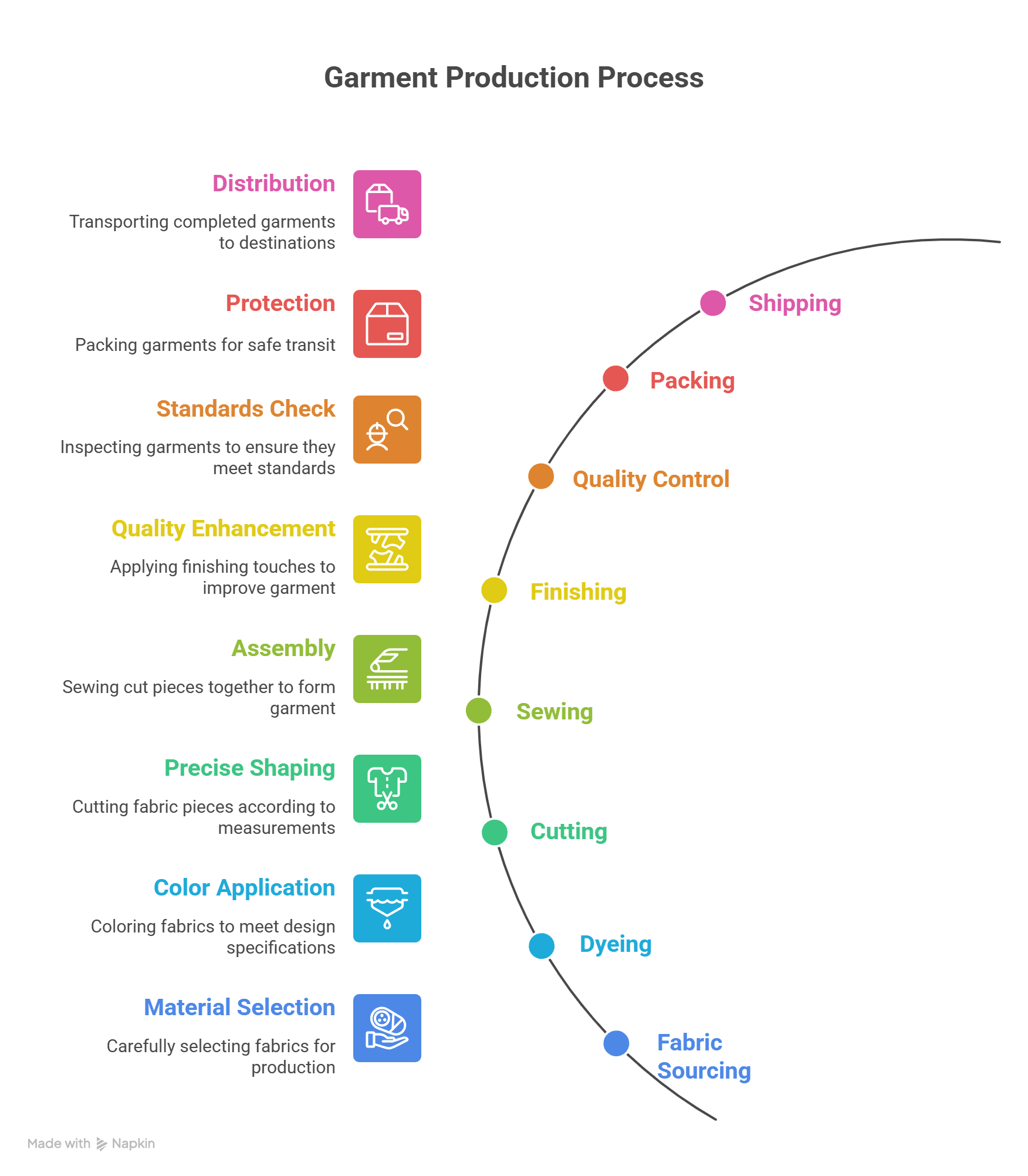
Below is the full structured sourcing pipeline that global brands and sourcing companies use. Each stage builds on the next.
I will also include the diagram description for your WordPress designer.
Stage 1: Requirement Definition and Tech Pack Verification
At this stage, brands and sourcing partners clarify:
Style details
Fabric type, GSM, composition
Construction details
Stitching expectations
Print, wash, embroidery, or special processes
Size specifications and grade rules
Target price
Target delivery window
Compliance requirements
Packaging and labelling requirements
Errors in tech packs result in incorrect costing, samples, or bulk production.
This is one of the highest impact stages for risk mitigation.
Common issues discovered during tech pack verification:
Missing measurements
Incomplete BOM (bill of materials)
Incorrect artwork positioning
Missing colourways
Ambiguous construction notes
Unrealistic price targets relative to fabric selection
Stage 2: Factory Identification and Capability Matching
Selecting the right factory is the foundation of successful sourcing.
Factories differ by:
Product category specialisation
Machinery capability
Compliance level
Capacity availability
Price competitiveness
Lead time performance
Technical sophistication
Vertical vs non vertical structure
For example:
A denim factory cannot produce lingerie.
A knitwear factory cannot produce fully taped waterproof outerwear.
A small workshop cannot meet a 200,000 piece order.
A low compliance unit cannot supply a UK retailer.
Accurate capability matching prevents:
Rejections
Quality failures
Delays
Cost disputes
Production breakdowns
At this stage, sourcing partners evaluate:
Factory profile
Recent buyers
Technical certifications
Audit status
Past performance
Machinery list
Monthly capacity
Sample room capability
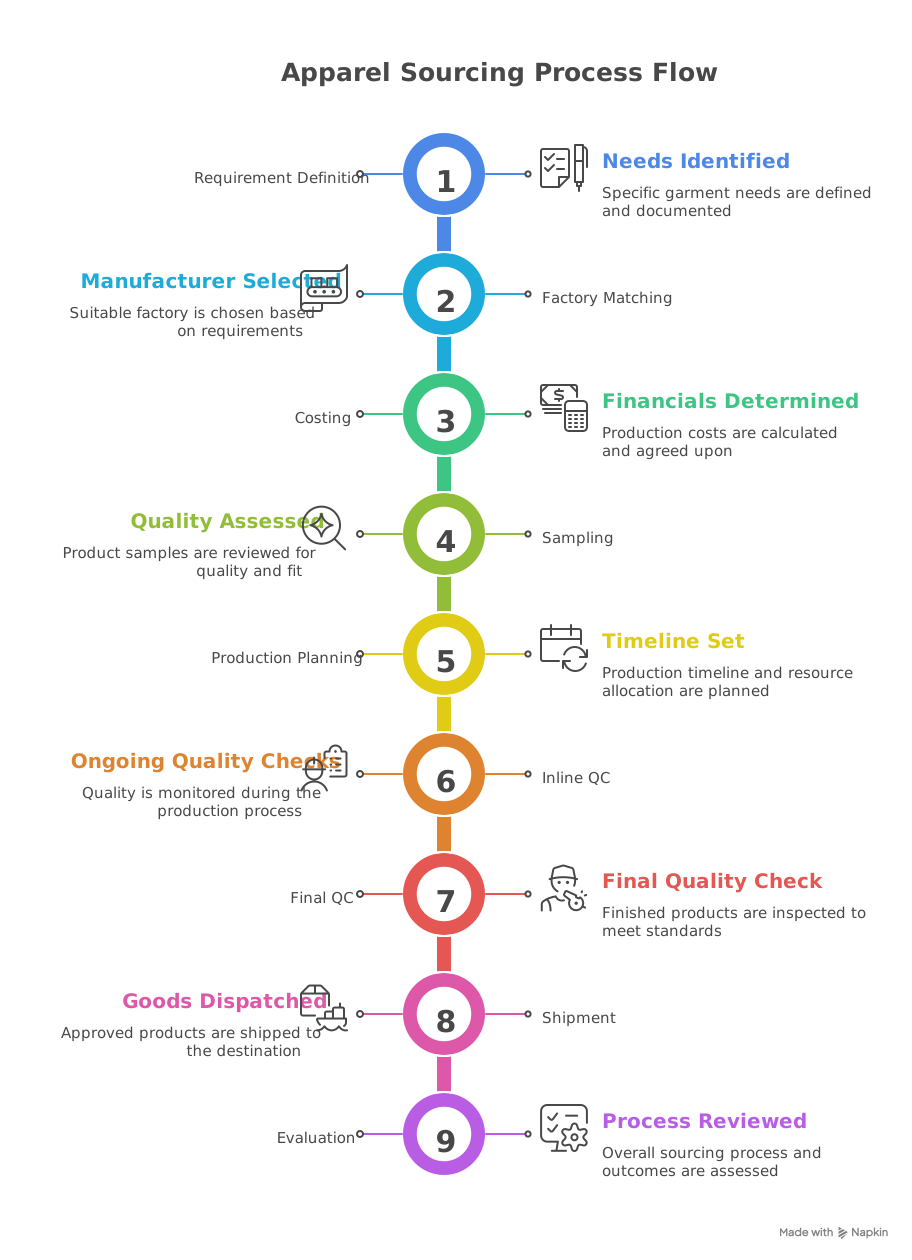
Stage 3: Costing, Compliance Checks, and Negotiation
Costing is not a single number. It is a structured breakdown of:
Fabric cost
Trims and accessories
Cutting and sewing labour cost (CM)
Washing / printing / embroidery costs
Overheads
Factory margin
Packaging costs
Testing charges
Brands often underestimate fabric cost volatility. Yarn price movements affect cotton, polyester, viscose, and blended fabric prices every month.
Compliance checks during costing include:
Valid audit certificates
Factory safety compliance
Sedex, BSCI, WRAP, ACCORD / RSC status
Chemical compliance capability (ZDHC, OEKO-Tex)
Negotiation includes:
FOB price
Payment terms
LC or TT structure
Delivery windows
Penalties or incentives
Bulk fabric sourcing method
Trims consolidation strategy
Stage 4: Sample Development and Iteration
Sampling is not only a creative process. It is a technical validation process.
Types of samples:
Proto sample
Fit sample
Size set
Pre production (PP) sample
Shipment sample
Sampling validates:
Construction accuracy
Fit and grading
Fabric handfeel and shrinkage
Print and embroidery positioning
Wash effects
Colour accuracy
Trims compatibility
Packaging alignment
Common issues found during sampling:
Incorrect shrinkage
Fabric shade variation
Print cracking
Misalignment of stitching
Incorrect labelling
Poor fit grading
Incorrect wash parameters
Each correction needs documentation to ensure bulk consistency.
Stage 5: Production Planning and Capacity Locking
Once samples are approved and materials sourced:
The factory allocates lines.
Cutting, sewing, finishing planning is scheduled.
Fabric and trims purchase orders are released.
Dyeing and wash facility bookings are made.
Delivery windows are aligned with freight slots.
This is where delays often emerge if:
Mills are overloaded
Dyeing units have backlog
Budget approvals are late
Samples are approved too slowly
Buyers often underestimate capacity planning risk.
Factories run at full capacity during peak seasons.
Stage 6: Inline Quality Control and Monitoring
Quality cannot be inspected at the end. It must be managed throughout.
Inline QC involves:
Fabric inspection (4 point system)
Cutting inspection
Sewing line checks
Measurement checks
Workmanship audits
Process controls
Daily production reporting
Defect categorisation and correction
Inline QC reduces the risk of bulk rejections.
Typical inline issues include:
- Oil stains
- Skipped stitches
- Open seams
- Untrimmed threads
- Print misplacement
- Shading differences
- Measurement instability
Stage 7: Final Inspection and Shipment Approval
Final inspection follows internationally recognised AQL standards, typically:
AQL 2.5
AQL 1.5
AQL 4.0
Based on brand requirements.
Inspections cover:
Measurements
Workmanship
Packaging
Labelling
Presentation
Quantity
Carton quality
Failure at final inspection can delay shipment by weeks.
Stage 8: Logistics, Documentation, and LC Workflows
This stage involves:
Commercial invoice
Packing list
Bill of lading
Form A / GSP
Country of Origin documentation
Inspection certificates
LC negotiation documents
Incorrect documentation can:
Delay cargo release
Trigger LC discrepancies
Increase bank charges
Create customs clearance issues
Buyers often underestimate how complex LC workflows are.
This is where sourcing agents add significant operational value.
Stage 9: Supplier Evaluation and Performance Scoring
After shipment, factories are scored on:
Cost competitiveness
Compliance stability
Quality performance
Delivery accuracy
Communication effectiveness
Innovation capability
Action plan responsiveness
Long term sourcing success requires continuous supplier evaluation.
Types of Apparel Manufacturers
Understanding Manufacturing Specialisation and Capability.
The global apparel industry is composed of highly specialised manufacturing units. Selecting the wrong factory category is one of the primary causes of sourcing failure. The technical, operational, and compliance capabilities required to produce denim jeans are fundamentally different from those needed for knitwear, lingerie, or waterproof outerwear.
A rigorous sourcing process requires precise factory classification. The sections below break down the major factory types used in apparel sourcing, with an emphasis on Bangladesh as a leading hub for each category.
Knitwear Factories
Knitwear units specialise in:
T shirts
Polo shirts
Sweatshirts
Joggers
Leggings
Basic knit dresses
Hoodies
Lightweight knit tops
Technical characteristics:
Circular knitting and flat knitting machinery
Local fabric mills enabling shorter lead times
Large volume capacity
High efficiency in basic styles
Moderate technical complexity
Knitwear accounts for a significant share of Bangladesh’s export volume due to fabric availability, skilled operators, and vertically integrated clusters.
Woven Factories
Woven factories produce:
Shirts
Blouses
Trousers
Skirts
Shorts
Basic woven dresses
Uniforms
Characteristics:
Pattern accuracy is critical
Button, collar, cuff, and placket work requires precision
Higher number of operations than basic knitwear
Typically longer lead times due to fabric sourcing
Bangladesh has strong woven factories but fabric availability may require imported yarn or greige fabric depending on complexity.
Denim and Washing Facilities
Denim is one of the most technically demanding categories.
Capabilities required:
Heavy duty sewing machines
Industrial washing plants
Laser finishing
Ozone washing
Enzyme stone washing
Tinting, whiskering, grinding, distressing
Shade control across bulk production
Denim production requires:
Chemical expertise
Environmental compliance
Water treatment systems
Shade control workflows
Bangladesh is a global leader in denim manufacturing due to world class washing plants and vertically integrated mills.
Outerwear and Technical Factories
Outerwear requires advanced machinery and technical craftsmanship.
Products include:
Puffer jackets
Parkas
Windbreakers
Waterproof jackets
Seam taped garments
Softshell and hardshell jackets
Required capabilities:
Bonding and laminating machines
Seam taping technology
Insulation handling
Advanced pattern engineering
Complex trims and fastening systems
Not all countries have strong outerwear ecosystems. Bangladesh has several Tier 1 outerwear factories equipped with bonding and taping capability.
Sweater Factories
Sweaters are produced using:
Fully fashioned knitting machines
Linking machines
Washing and finishing units
Sweaters require:
Yarn management
Gauge-specific production
Skilled linking operators
High accuracy in shaping
Sweater factories are distinct from knitwear factories. Bangladesh has a mature sweater manufacturing cluster.
Vertical vs Non Vertical Factories
Vertical factories own multiple stages of production such as:
Yarn
Knitting
Dyeing
Cutting
Sewing
Finishing
Packing
Advantages:
Shorter lead times
Lower cost variability
Stronger supply chain control
Non vertical factories rely on external mills or washing units.
Subcontracting Risk & due diligence
The biggest compliance risk in the sourcing industry is unapproved subcontracting. This occurs when a factory secretly outsources cutting or sewing to an unaudited facility.
Consequences:
Compliance violations
Audit failure
Shipment delays
Reputational risk
Strong governance prevents subcontracting leakage.
Factory Capability Matrix
| Capability | Knitwear | Woven | Denim | Outerwear | Sweater |
|---|---|---|---|---|---|
| Basic styles | High | High | Medium | Low | Medium |
| Complex styles | Medium | Medium | High | High | Medium |
| Wash dependency | Low | Medium | Very High | Medium | Low |
| Machinery sophistication | Medium | Medium | High | Very High | Medium |
| Lead time flexibility | High | Medium | Medium | Low | Medium |
| MOQ flexibility | High | Medium | Low | Low | Medium |
| Vertical integration availability | High | Medium | Medium | Low | Medium |
Cost Structures in Apparel Sourcing. A Complete Breakdown
Costing is one of the most misunderstood areas in apparel sourcing. Many brands assume pricing is arbitrary when in reality it is a technical calculation based on consumption, labour minutes, operations, and overhead.
Below is a detailed breakdown of how pricing is constructed.
FOB Price Structure
FOB (Free on Board) includes the costs required to deliver finished goods onto a vessel at the port of departure.
Typical FOB breakdown:
1. Fabric Cost
Fabric typically accounts for 50 percent to 70 percent of total garment cost.
Key variables include:
Yarn type
GSM
Composition
Dyeing method
Knitting or weaving cost
Finishing (bio wash, silicon finish, brushing)
Shrinkage allowance
Fabric wastage percentage
Fabric cost is the single biggest driver of variability.
2. Trims and Accessories
This includes:
Zippers
Buttons
Thread
Labels
Hangtags
Elastic
Toggles
Heat seals
Packaging materials
Trim choices affect cost significantly for outerwear and denim.
3. Cutting and Sewing Labour (CM)
CM stands for Cut and Make.
Factors affecting CM:
Number of sewing operations
Complexity of stitching
Number of components
Machine types required
Operator skill
Factory efficiency
Line layout
Complex garments require more machine minutes, increasing CM.
4. Printing and Embellishment Costs
This includes:
Screen printing
Digital printing
Heat transfer
Embroidery
Applique
Foil work
Sublimation
Rubber badges
Print placement and size directly influence cost.
5. Washing Costs (Denim and Garment Dyeing)
Washing adds:
Chemistry cost
Water usage
Labour
Machine time
Energy
Effluent treatment
Advanced finishes such as laser distressing increase cost.
6. Finishing and Packing
Includes:
Ironing
Thread trimming
Folding
Polybag
Carton boxes
Quality checks
7. Factory Overheads
- Electricity
- Management cost
- Depreciation
- Waste management
- Compliance expenses
8. Factory Margin
Ranges widely depending on:
Buyer size
Negotiation leverage
Partnership stability
Factory brand reputation
Typical margin range: 5 percent to 15 percent.
Compliance Requirements in Apparel Sourcing
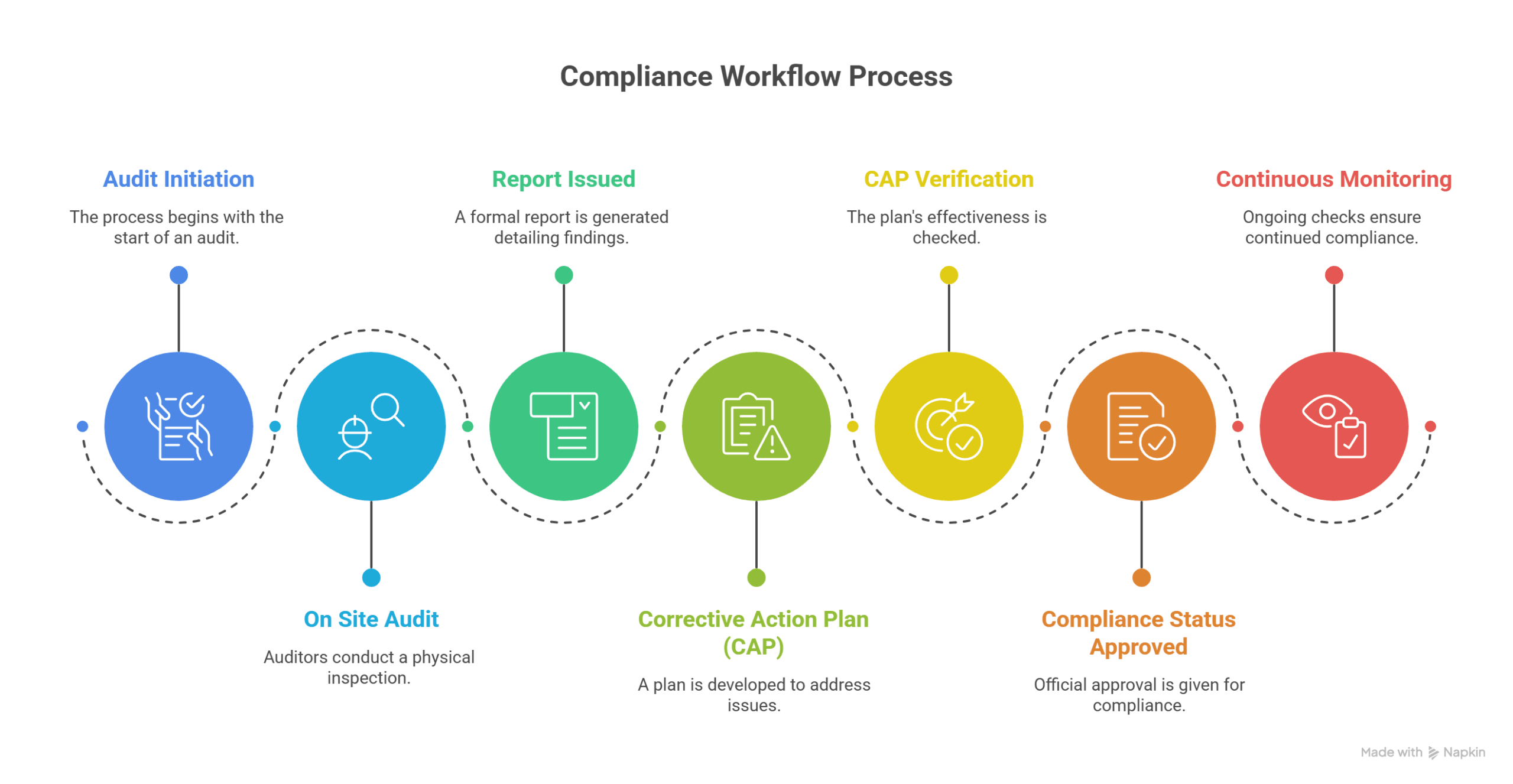
Compliance is non negotiable. Brands must ensure that workers are protected, wages are fair, the environment is safeguarded, and ethical standards are upheld.
Non compliance exposes brands to:
Reputational damage
Legal risk
Supply chain disruption
Shipment cancellation
Retailer penalties
Below are the core compliance dimensions.
Social Compliance
Key frameworks include:
Sedex SMETA
BSCI
WRAP
SA8000
ETI Base Code
Audits evaluate:
Working hours
Wages
Overtime policy
Fire safety
Building safety
Worker welfare
Freedom of association
Dormitory conditions
Environmental Compliance
Environmental compliance now carries equal weight.
Standards include:
OEKO Tex 100
Higg FEM
GOTS (for organic)
ZDHC (chemical management)
Bluesign
Evaluated areas:
Chemical handling
Wastewater treatment
Energy usage
Hazardous waste disposal
Environmental impact reduction plans
Ethical Sourcing and Governance
Ethical sourcing covers:
Against forced labour
Against child labour
Anti harassment controls
Transparent recruitment
No unauthorised subcontracting
Quality Control Across the Apparel Sourcing Lifecycle
A Technical Overview
Quality control is not a single inspection event. It is a lifecycle discipline embedded across every stage of production.
Below is the complete QC structure.
1. Fabric Inspection
Uses the 4 point system to grade fabric rolls.
Common defects:
Holes
Slubs
Knots
Shading variation
Contamination
Uneven dyeing
2. Inline Production Checks
Occurs daily at the sewing lines.
Checks include:
Stitching quality
Seam strength
Alignment accuracy
Thread tension
Label placement
Panel matching
3. Midline Inspection
A technical audit at 30 to 40 percent production completion.
Purpose:
Identify systemic defects early
Validate construction consistency
Ensure trim usage accuracy
4. Pre Final Inspection
Performed before packing.
Ensures:
Measurements align with size charts
Packaging adheres to buyer specifications
Presentation is consistent
No foreign objects or contamination
5. Final AQL Inspection
Industry standard method.
Typical levels:
AQL 2.5 for standard garments
AQL 1.5 for premium products
AQL 4.0 for low risk categories
Inspection covers:
Measurement tables
Workmanship
Appearance
Packaging
Carton condition
Sourcing Strategies for Modern Fashion Brands
Building Resilient, Cost Efficient, and Compliant Supply Chains
Contemporary apparel sourcing strategies must account for unpredictability, global instability, raw material price shifts, shorter fashion cycles, and increasing sustainability obligations. Older models that relied on cost alone are no longer viable. Successful brands employ multi dimensional sourcing strategies that balance cost, speed, compliance, risk, and innovation.
Below are the primary strategic frameworks used in apparel sourcing today.
Cost Optimisation vs Speed to Market
Cost optimisation often pushes production to high efficiency, lower cost regions.
Speed to market prioritises proximity, responsiveness, and rapid replenishment.
Brands choose based on product nature:
| Product Type | Priority Strategy |
|---|---|
| Fashion basics | Cost optimisation |
| Fast fashion trend items | Speed to market |
| Outerwear | Technical capability |
| Athleisure | Material expertise |
| Premium garments | Quality consistency |
Bangladesh is ideal for cost optimised, high quality basics, denim, knitwear, and mainstream fashion items.
Country Diversification Strategy
Single country dependency exposes brands to:
Political instability
Freight disruption
Climate related delays
Currency volatility
Capacity shortages
Sourcing diversification frameworks include:
Dual country sourcing
Multi hub sourcing
Category based multi region sourcing
Seasonal split sourcing
Example configuration for a brand:
Bangladesh for knitwear and denim
Turkey for speed to market woven tops
China for complex trims and accessories
Vietnam for outerwear
India for embroidery heavy garments
Diversification reduces systemic risk.
Supplier Portfolio Management
A balanced supplier portfolio includes:
Strategic long term partners
Seasonal capacity partners
Technical specialists
Small MOQs partners
Innovation and R&D partners
Factories should be evaluated annually using scoring systems.
Key metrics include:
Shipment reliability
Rejection rates
Cost competitiveness
Compliance status
Innovation contribution
Responsiveness
Sustainability Driven Sourcing
ESG pressures are reshaping sourcing decisions.
Brands increasingly require:
Sustainable fibres (organic cotton, recycled polyester)
Chemical management compliance (ZDHC)
Verified supply chain transparency
Waste reduction initiatives
Lower carbon footprint logistics
Cleaner dyeing technology (foam dyeing, CO2 dyeing)
Bangladesh has invested significantly in green factories and wastewater treatment, making it a favourable destination for sustainability driven sourcing.
Managing Geopolitical and Macro Risks
Macro risks include:
Trade tensions
Tariff changes
Global freight increases
Port congestion
Energy shortages
Pandemic disruptions
Resilient sourcing strategies prioritise flexibility, contingency planning, and rapid adaptation.
Why Bangladesh Is a Global Leader in Apparel Sourcing
A Detailed Analysis
Bangladesh has developed into one of the most important apparel sourcing destinations worldwide. Its success is not based on cost alone. It is built on industrial scale, vertical integration, product expertise, compliance maturity, and strong labour skill.
Below is a comprehensive analysis.
Cost Competitiveness
Bangladesh remains highly competitive due to:
Economies of scale
High production efficiency
Large workforce
Strong factory utilisation
Competitive CM rates
Locally available knit fabrics
This cost advantage enables brands to maintain margins without compromising quality.
Vertical Integration Capabilities
Bangladesh’s vertically integrated ecosystems provide:
Yarn spinning
Knitting
Dyeing
Cutting
Sewing
Finishing
Packing
Vertical integration reduces:
Lead time
Fabric costs
MOQ barriers
Dependency on imported materials
This is especially beneficial for knitwear and denim.
Expertise in Key Product Categories
Bangladesh excels in:
Knitwear
Sweaters
Denim
Basic woven
Athleisure
Uniforms
Factories are equipped with modern machinery and skilled operators.
Advanced Compliance Ecosystem
Bangladesh has hundreds of factories certified in:
Sedex
BSCI
WRAP
OEKO Tex
Higg Index
In addition, the country has the highest number of LEED certified green garment factories globally.
Compliance maturity is a core competitive advantage.
Strong Capacity for Large Orders
Factories in Bangladesh provide:
Large cutting capacity
Extensive sewing lines
High workforce availability
Multiple shifts when necessary
Efficient finishing sections
This makes Bangladesh ideal for high volume buyers from Europe, UK, and North America.
Strengths for Different Buyer Types
| Buyer Type | Bangladesh Advantage |
|---|---|
| High street retailers | Cost, scale, compliance |
| DTC brands | Consistent quality, predictable costing |
| Wholesalers | Large volume scalability |
| Department stores | High compliance and QC reliability |
| Workwear brands | Strong woven and uniform capability |
Bangladesh is positioned as a global leader due to a combination of cost, compliance, and scale.
When Should a Brand Use an Apparel Sourcing Agent?
Strategic and Operational Rationale
Working with a professional apparel sourcing agent or sourcing company provides substantial operational, commercial, and compliance advantages. While some large brands build internal sourcing teams, most rely on specialists due to complexity and risk.
Below are the scenarios where a sourcing agent adds significant value.
1. Lack of In House Technical Capability
Brands often lack specialists in:
Pattern engineering
Fabric sourcing
Compliance auditing
QC management
LC documentation
Agents fill these gaps immediately.
2. Limited Market Knowledge
Understanding which factories are best for:
Knitwear vs denim vs outerwear
High volume vs small runs
Technical garments vs basics
Eco friendly materials vs standard fabrics
requires years of field experience.
3. Need for Cost Negotiation Leverage
Agents negotiate across multiple factories, enabling:
Better price positioning
Fairer margin structures
Transparent costing
Competitive benchmarking
4. End to End Production Oversight
Without a sourcing partner, brands face delays and quality failures.
Agents offer:
Daily production monitoring
Inline QC
Final inspection
CAP follow up
Delivery coordination
5. Compliance and Audit Management
Agents verify:
Factory compliance
Audit validity
CAP closure
Subcontracting risk
Chemical handling standards
6. LC Handling and Documentation Oversight
Document discrepancies often delay shipments.
Agents reduce this risk by managing:
Packing lists
Commercial invoices
Bill of lading review
LC documentation
Certificate of origin
GSP forms
7. Multi Factory Coordination
Managing multiple factories for:
Tops
Bottoms
Outerwear
Basics
Seasonal items
requires structured workflow governance.
8. Speed and Responsiveness
Agents accelerate:
Sample corrections
Cost negotiation
Booking approvals
Production planning
Shipping arrangements
This speed has commercial value during peak seasons.
9. Long Term Sourcing Strategy Development
Agents assist in:
Country diversification planning
Category based allocation
Supplier portfolio strategy
Sustainability integration
The Future of Apparel Sourcing
Structural Shifts and Emerging Trends.
Sourcing is entering a new era shaped by technology, sustainability expectations, supply chain transparency, and geopolitical risk. Below are the long term trends that will define the next decade.
AI Driven Forecasting and Demand Planning
AI models will improve:
Sales prediction
Raw material planning
Capacity booking
Inventory optimisation
This reduces waste and prevents stockouts.
Digital Sampling and 3D Prototyping
3D sampling reduces:
Sampling time
Physical waste
Fit approval cycles
Material usage
Buyers accelerate development while reducing cost.
Traceability and Supply Chain Transparency
Blockchain and digital IDs enable:
Fibre origin validation
Mill level tracking
Factory level transparency
Buyer facing product passports
EU and UK regulations will mandate this.
ESG Driven Sourcing
Brands are shifting toward:
Low carbon materials
Environmentally optimised dyeing
Recycled fibres
Circular production models
Factories will compete on sustainability performance.
Supplier Consolidation and Strategic Partnerships
Buyers will rely on:
Fewer, better factories
Long term agreements
Guaranteed capacity
Shared forecasting systems
Suppliers with stronger governance will dominate.
Automation in Cutting and Sewing
- Cutting automation is widespread.
- Sewing automation is advancing slowly but steadily.
- AI assisted defect detection will reduce QC cost.
Key takeaways for Fashion and Apparel Brands
Apparel sourcing is a structured, multi stage operational discipline that requires technical expertise, compliance governance, and commercial negotiation.
Bangladesh provides unmatched value for knitwear, denim, sweater, and woven production due to scale, capability, and compliance maturity.
Transparent costing, robust quality control, and long term supplier evaluation are essential for sustainable sourcing success.
Working with a sourcing agent improves cost visibility, operational oversight, compliance resilience, and supply chain speed.
Future sourcing will increasingly rely on digital tools, sustainability metrics, and traceability systems.
If your brand is seeking a reliable apparel sourcing partner with access to Tier 1 and mid-tier factories in Bangladesh, Epsilon Global Sourcing provides:
End to end apparel sourcing service
Factory capability matching
Transparent costing breakdown
Compliance and audit oversight
Multi stage quality control
LC and documentation handling
Production tracking and reporting
Contact us to discuss your sourcing needs and strengthen your supply chain with a high performing Bangladesh apparel sourcing team.