Apparel Sourcing 101: Key Terms Every Fashion Buyer Must Know
January 5, 2026
The True Cost of Apparel Sourcing: A Full Breakdown
January 16, 2026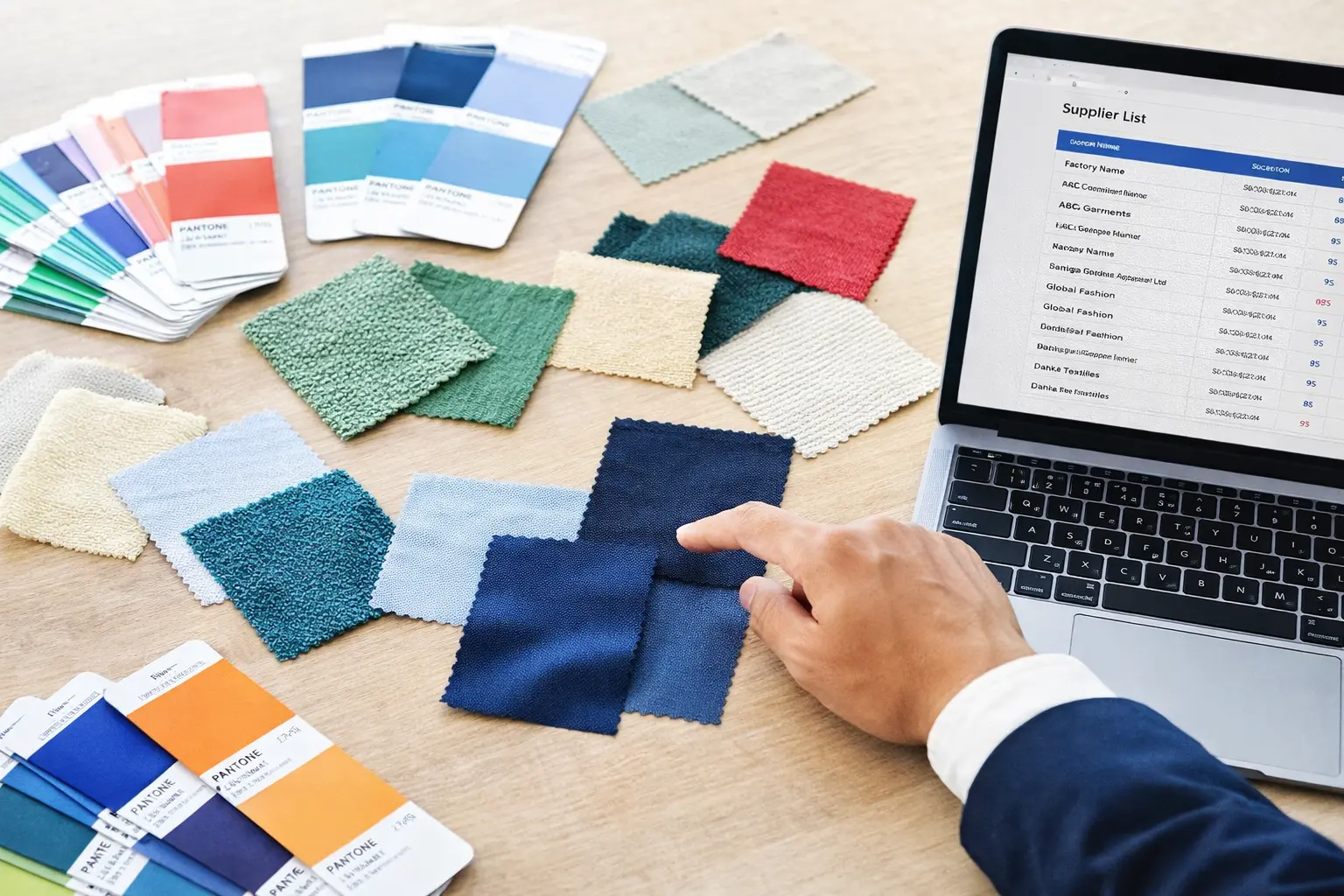
In the high-velocity world of global fashion, the bridge between a brilliant design and a market-ready product is often a single, pivotal partner: the apparel sourcing agent. As we navigate the complex landscape of 2026—marked by the implementation of EU Digital Product Passports (DPP) and a global push for circularity—Bangladesh apparel sourcing has emerged not just as a volume leader, but as the world’s most sustainable and safe manufacturing hub.
This evergreen guide serves as the definitive industry resource for brands looking to master the apparel sourcing process. Whether you are a startup navigating your first production run or an established retailer seeking to optimize garment sourcing in hubs like Bangladesh, this article provides the technical depth and commercial frameworks required to secure a competitive advantage.
Table of contents
ShowHide- Executive Summary
- Section 1: The 2026 Sourcing Landscape – Navigating Geopolitical Shifts
- Section 2: Bangladesh Apparel Sourcing – A Deep Dive into the World's Factory
- Section 3: The 12-Step Modern Apparel Sourcing Process
- Section 4: Choosing Your Partner – Agent vs. Trading Company vs. Direct
- Section 5: The Technical Core – Quality Assurance & AQL Standards
- Section 6: Sustainability & The Digital Product Passport (DPP)
- Section 7: The "China + 3" Strategy – Regional Sourcing Profiles
- Section 8: Detailed Fabric Science – A Strategic Sourcing Roadmap
- Section 9: Legal & Commercial Frameworks in 2026
- Section 10: The Sourcing Agent Interview Script
- Section 11: Commercial Practices – CMT, FOB, and LDP Explained
- 2026 Sourcing Strategy Roadmap: High-Level View
- Category-Specific Deep Dives
- Buyer-Focused Takeaway: The 20-Point "Authority" Checklist
- Final Takeaway: The 2026 Sourcing Blueprint
Executive Summary
Choosing a clothing sourcing agent is no longer just about finding the lowest FOB (Free on Board) price. In 2026, the "Right Agent" is defined by their ability to provide radical transparency, mitigate ESG (Environmental, Social, and Governance) risks, and leverage digital tools for real-time supply chain visibility. This guide deconstructs the apparel sourcing service into actionable phases, evaluates the strategic importance of Bangladesh apparel sourcing during its LDC transition, and provides a rigorous 20-point selection framework to ensure your brand's longevity in a value-conscious market.
Key Insights for 2026
Compliance as a Competitive Moat: With the 2026 transition for LDCs and the rollout of the EU’s Ecodesign for Sustainable Products Regulation (ESPR), an agent’s ability to verify 110+ data points for a Digital Product Passport is a baseline requirement.
The Hybrid Tech Model: Top-tier fashion sourcing companies now offer a "Hybrid Model," combining on-the-ground factory management with CLO3D/Browzwear virtual prototyping to reduce lead times by 30-40%.
Bangladesh’s "High-Road" Pivot: Sourcing in Bangladesh is shifting from low-wage commodity production to "High-Road" manufacturing, focusing on value-added items (outerwear, technical knits) and LEED-certified green factories.
Strategic vs. Transactional: Success requires shifting from "transactional" buying to "strategic partnerships" where agents manage the entire life cycle from raw material yarn-sourcing to final delivery.
Section 1: The 2026 Sourcing Landscape – Navigating Geopolitical Shifts
To dominate apparel manufacturing sourcing, one must understand the tectonic shifts occurring in global trade.
1.1 The End of "Business as Usual" for LDCs
November 2026 marks a historic turning point: Bangladesh is set to graduate from Least Developed Country (LDC) status. While this signifies economic progress, it introduces a "Price Shock" for brands.
The Tariff Cliff: Duty-free access to the EU (0%) may eventually transition to GSP+ rates (approx. 9.6%–12%).
The Agent’s Role: A world-class apparel sourcing agent is already negotiating 3-year transition agreements and helping factories optimize efficiency to absorb these cost increases without passing them to the brand.
1.2 The "China Content" Challenge
US trade policy in 2026 (including the formal USMCA review) has intensified scrutiny of "transshipment." Even when sourcing from Vietnam or Cambodia, brands must prove that the "value-added" isn't merely a pass-through for Chinese raw materials. An expert fashion sourcing service provides the "Rules of Origin" documentation required to avoid costly customs seizures.
Section 2: Bangladesh Apparel Sourcing – A Deep Dive into the World's Factory
Garment sourcing remains synonymous with Bangladesh, the world’s second-largest exporter. However, the "Bangladesh" of 2026 is vastly different from a decade ago.
2.1 The Rise of Green Hubs
Bangladesh now hosts the highest concentration of LEED-certified garment factories globally. When choosing a Bangladesh apparel sourcing partner, they must be able to map your production to these specific clusters:
Gazipur & Ashulia: The heart of knitwear and T-shirt production.
Narayanganj: Specialized in high-end hosiery and intricate knit designs.
Chittagong (Port City): Strategic for high-volume woven goods and outerwear, offering faster lead times due to port proximity.
2.2 Vertical Integration: The Secret to Speed
The most effective agents in Bangladesh work with "Vertical Factories"—those that spin their own yarn, knit the fabric, and sew the garment in one campus.
Why it matters: It eliminates the 3-4 week lead time usually spent waiting for fabric imports, making your brand significantly more agile.
Section 3: The 12-Step Modern Apparel Sourcing Process
To become an authority, you must master the technical "Critical Path." A professional apparel sourcing process in 2026 follows this high-tech flow:
AI Trend & Tech Pack Analysis: The agent reviews your BOM (Bill of Materials) and uses AI tools to predict fabric availability.
3D Virtual Sampling (The "Digital Twin"): Before a single meter of fabric is cut, a 3D prototype is created.
Factory Matchmaking (Audit-First): Selecting 3-5 factories based on machinery (e.g., seamless vs. flat knit) and real-time compliance scores.
Raw Material Traceability: Verifying the "Farm-to-Fiber" journey to comply with the Uyghur Forced Labor Prevention Act (UFLPA) and similar global mandates.
Costing & Open-Book Transparency: A world-class apparel sourcing service provides "Open-Book" costing, showing exactly what goes to the factory, the fabric mill, and the agent's commission.
Lab Dip & Strike-Off Approvals: Technical color matching using spectrophotometers to ensure "Color Consistency" across different light sources (D65, TL84).
Pre-Production (PP) Meeting: A mandatory technical review of the "Gold Sample" where every seam, button-pull strength, and label placement is finalized.
In-Line Inspection (15% Stage): Checking the first 15% of production to catch "Pattern Distortion" or "Shading" issues before the full batch is completed.
Chemical Compliance Testing: Testing for REACH and ZDHC (Zero Discharge of Hazardous Chemicals) compliance.
Final AQL Quality Control: Using the ISO 2859-1 standard (typically AQL 2.5 for Major defects) to pass or reject the shipment.
Digital Product Passport (DPP) Serialization: Generating the unique QR codes that will stay with the garment throughout its lifecycle.
Logistics & LDP Management: Handling the complexity of Landed Duty Paid (LDP) shipments, including 2026’s volatile freight insurance rates.
Section 4: Choosing Your Partner – Agent vs. Trading Company vs. Direct
This is the most critical decision in fashion sourcing.
4.1 The Independent Sourcing Agent (The Partner)
Business Model: Commission-based (usually 5–10%).
Best For: Brands that want full transparency and "boots on the ground." The agent works for you, not the factory.
2026 Edge: They are essential for navigating ESG audits.
4.2 The Fashion Sourcing Company / Trading House (The Buffer)
Business Model: Markup-based (they buy low, sell high).
Best For: Small brands or startups that cannot handle the financial risk of an L/C (Letter of Credit) or complex logistics.
The Risk: You often don't know which factory is actually making your clothes, which is a massive liability under the EU's new transparency laws.
4.3 Direct-to-Factory (The Internal Model)
Best For: Massive retailers (Zara, H&M) with their own offices in Dhaka or Shanghai.
The Pitfall: Without an agent's local leverage, a medium-sized brand is often "bumped" from the production schedule when a larger client places an emergency order.
Section 5: The Technical Core – Quality Assurance & AQL Standards
In garment sourcing, "Quality" is a mathematical formula, not a feeling. A top-tier clothing sourcing agent uses the Acceptable Quality Limit (AQL) framework.
5.1 Understanding the AQL Chart
In 2026, the industry standard has tightened.10 Most premium brands now demand AQL 1.5 for Major Defects and 0.0 for Critical Defects.
| Defect Category | Examples | 2026 Industry Tolerance |
| Critical | Broken needles, sharp edges, mold, incorrect fiber content label. | 0% (Zero Tolerance) |
| Major | Holes, significant shading, non-functional zippers, sizing out of tolerance (>2cm). | 1.5% to 2.5% |
| Minor | Loose threads, slight puckering, removable stains, crooked care label. | 4.0% |
5.2 The 2026 "Tech-Audit"
Beyond physical defects, your agent must now audit for "Digital Defects." Is the RFID tag readable? Does the DPP QR code link to the correct material composition data? If your agent doesn't have a digital QC checklist, they are obsolete.
Section 6: Sustainability & The Digital Product Passport (DPP)
The most significant change in the apparel sourcing process this year is the mandatory "Data Discipline" required by the EU.
6.1 What is the Digital Product Passport?
The DPP is a digital twin of your garment.11 By 2027, every textile item sold in the EU must have one.12 Your apparel sourcing service is responsible for collecting the 110+ data points required, including:
Origin of Raw Materials: Where was the cotton picked?
Chemical Usage: Is the dyeing process Oeko-Tex certified?
Recyclability Score: How easily can the garment be disassembled?
Carbon Footprint: The total $CO_2$ impact from "Ginning to Port."
Section 7: The "China + 3" Strategy – Regional Sourcing Profiles
While Bangladesh apparel sourcing provides the volume and ESG-centricity required for mass-market programs, a diversified "China + 1" (or increasingly, China + 3) strategy is the industry standard for 2026. Diversification is no longer just about price; it is about de-risking the supply chain against regional geopolitical shifts, such as the 2026 USMCA formal review and climate-related port closures.
7.1 Vietnam: The High-Tech Outerwear Specialist
Vietnam has solidified its position as the premier destination for apparel manufacturing sourcing involving technical complexity. As brands move away from basic silhouettes toward high-performance gear, Vietnam's infrastructure is unmatched.
Technical Edge: Expertise in ultrasonic welding, laser cutting, and seam-sealing. Unlike many regions that focus on "Cut and Sew," Vietnamese factories are masters of "Bonding and Construction."
The Sourcing Agent's Role: Your agent in Vietnam must have a background in technical garment construction. They should be able to audit the factory's pressure-testing equipment to ensure waterproof ratings ($20,000mm+$) are actually met.
Trade Advantage: The EVFTA (EU-Vietnam Free Trade Agreement) continues to provide a massive competitive advantage for brands shipping to Europe, offsetting slightly higher labor costs compared to Bangladesh.
7.2 Turkey: The Nearshoring & Speed-to-Market King
For EU-based brands, Turkey is the ultimate "Speed-to-Market" partner. In a 2026 retail environment where trends go from social media to "Out of Stock" in record time, Turkey’s geographic proximity is a strategic weapon.
The "Green" Edge: Turkey has invested heavily in GOTS-certified organic cotton and circular textile innovation. It is often the first choice for premium brands testing recycled fiber blends.
Logistics: While sea freight from Asia can take 35+ days, truck transport from Istanbul to major European hubs takes 4–7 days.
The Sourcing Agent's Role: Your clothing sourcing agent in Turkey must focus on "Small Batch Agility." They should manage "Chasing Orders" where you place small initial runs and "chase" winners with 14-day production turnarounds.
7.3 India: The Home of Embellishment & Value-Added Knits
India remains the global authority for "high-touch" fashion. As premium-bridge brands move away from commodity looks, India’s artisanal and spinning capabilities are in high demand.
Product Strengths: Intricate hand-embroidery, block printing, and high-GSM heavyweight knits. India is also a powerhouse for home textiles (bedding and towels) using high-quality local long-staple cotton.
Sustainability Hub: India is the world’s largest producer of organic cotton, making it a primary target for brands looking to secure a "100% Organic" supply chain.
The Sourcing Agent's Role: In India, the apparel sourcing service must include a heavy focus on Social Compliance. An agent must ensure that artisanal workshops and home-working policies comply with strict global labor standards.
Section 8: Detailed Fabric Science – A Strategic Sourcing Roadmap
To master the apparel sourcing process, your team must understand the "DNA" of the product: the fabric. This roadmap ensures that your material strategy aligns with 2026's push for circularity and mono-material construction.
8.1 Woven Sourcing (The "Long-Game")
The Strategy: Woven fabric lead times remain the longest in the industry (45–90 days). Your roadmap must prioritize Loom Booking.
How-to: Secure your "Greige" (raw, undyed fabric) 90 days in advance. In 2026, dyeing is fast, but weaving is slow. By holding greige, you can delay final color decisions until closer to the launch, based on real-time trend data.
8.2 Knit Sourcing (The "Yarn-Forward" Approach)
The Strategy: The quality of a knit is determined at the yarn-spinning stage. Strategy should focus on "Yarn-Forward" sourcing to control price volatility and ensure 100% recyclability.
How-to: Specify the Yarn Micron and Fiber Length. For 2026, prioritize "Mono-Materials" (e.g., 100% Cotton or 100% Recycled Polyester) rather than blends, which are difficult to recycle under the new EU Ecodesign regulations.
8.3 Denim Sourcing (The "Eco-Tech" Wash)
The Strategy: The competitive edge in denim is now the "Water Footprint."
How-to: Audit the laundry, not just the sewing floor. Your roadmap must include "Dry-Process" milestones such as Laser, Ozone, and E-flow, which replace traditional water-heavy stone washing. Ensure your agent sources from mills providing at least 20% post-consumer recycled fiber.
Section 9: Legal & Commercial Frameworks in 2026
A world-class apparel sourcing agent is as much a legal gatekeeper as they are a production manager. Your contracts must reflect the volatility of the 2026 landscape.
9.1 Force Majeure: Climate-Ready Clauses
In 2026, Force Majeure must go beyond "Acts of God." Your agreement should specifically define:
Logistics Failures: Delays caused by low water levels in shipping canals or major grid failures in manufacturing hubs.
Mitigation: The contract should mandate that the agent has a "Secondary Factory" backup plan ready to trigger within 48 hours of a Force Majeure event.
9.2 Modern Penalty Clauses
Do not just penalize for late delivery; penalize for Data Defaults.
LDP/Delivery Penalties: 1.5% of FOB value per week of delay.
The "DPP Penalty": If a factory fails to provide the machine-readable JSON data required for the Digital Product Passport, the shipment is technically "incomplete." Withhold 5% of the final payment until the digital twin is verified.
9.3 Payment Security & Financial Strategy
Escrow Services: Becoming the standard for new relationships. Funds are held by a third party and only released when the AQL certificate and DPP data are signed off.
Open Account (OA) 60/90: For established brands, moving to OA terms allows you to use the supply chain to finance your operations, though it requires high-trust partnerships with your fashion sourcing company.
Section 10: The Sourcing Agent Interview Script
When you get a potential clothing sourcing agent on a call, use these 15 targeted questions to separate the industry veterans from the commission-chasers.
The Technical & Compliance Round
"How do you verify yarn origin for UFLPA (forced labor) compliance?"
"What is your process for managing Digital Product Passport (DPP) data collection?"
"Do you perform in-line inspections at the 15% production stage?"
"Can you provide 3D virtual samples using CLO3D or Browzwear?"
"Which LEED-certified factories are currently in your active network?"
The Commercial & Risk Round
"How will you help our brand navigate the 2026 Bangladesh LDC graduation?"
"What is your standard commission, and do you offer open-book costing?"
"How do you handle a failed AQL inspection—who pays for the re-work?"
"Do you have a local office in [Dhaka/Ho Chi Minh/Istanbul]?"
"Can you manage LDP (Landed Duty Paid) shipments for our specific region?"
The Partnership Round
"What is the largest volume you have managed for a single client?"
"How do you handle fabric shortages or sudden price spikes in raw materials?"
"What digital tools do you use for real-time production tracking?"
"Can you provide references from brands of a similar scale to ours?"
"How do you vet the social compliance (e.g., BSCI/Sedex) of your factories?"
Interview Cheat Sheet: Red Flags vs. Green Flags
Red Flag: "We trust the factory's word on origin." (Indicates high audit risk).
Green Flag: "We provide a full chain of custody with transaction certificates for every batch." (Indicates 2026-ready transparency).
Section 11: Commercial Practices – CMT, FOB, and LDP Explained
To dominate the apparel manufacturing sourcing conversation, you must speak the language of the "Term Sheet."
CMT (Cut, Make, Trim): The brand provides the fabric; the factory only provides the labor. High risk, high control.
FOB (Free on Board): The factory provides everything until the goods are on the ship. This is the global standard for fashion sourcing.
LDP (Landed Duty Paid): The factory or agent handles everything—shipping, taxes, and duties—until the goods reach your warehouse. Ideal for brands without an in-house logistics team.
To succeed in the 2026 apparel landscape, a sourcing strategy must move beyond "lowest cost" to prioritize circularity, digital agility, and regulatory compliance (specifically the EU Digital Product Passport).
Below is a custom Sourcing Strategy Roadmap designed to navigate the technical and geopolitical nuances of Wovens, Knits, and Denim.
2026 Sourcing Strategy Roadmap: High-Level View
| Phase | Milestone | Strategic Focus |
| Phase 1: Discovery | Digital Fabric Scouting | AI-driven trend forecasting & virtual swatch libraries. |
| Phase 2: Dev | 3D Prototyping | Reducing physical samples by 70% using tools like CLO3D or Shima Seiki. |
| Phase 3: Setup | Hub Diversification | Moving beyond China to "China + 1" (Vietnam, Bangladesh, Turkey). |
| Phase 4: Bulk | Circular Production | Implementing waterless dyeing and bio-based material tracking. |
Category-Specific Deep Dives
1. Woven Sourcing Strategy (Structured & Tailored)
Wovens in 2026 are dominated by a "return to craft" and structured silhouettes (e.g., bubble hems, oversized tailoring).
The Critical Path: Focus on Loom Booking. Woven fabric lead times remain the longest (45–90 days). Your strategy must secure greige goods (undyed fabric) early to allow for late-stage color agility.
2026 Material Shift: Transition from traditional polyester to Bio-based Synthetics (e.g., mushroom-derived coatings) to meet new EU microplastic regulations.
Strategic Hubs: * Vietnam: For high-complexity outerwear and technical wovens.
Turkey: For high-end tailoring and proximity to European markets (nearshoring).
2. Knit Sourcing Strategy (Stretch & Circularity)
The 2026 knit market is shifting toward Mono-Materials to ensure garments are 100% recyclable.
The Critical Path: Yarn Selection is everything. Unlike wovens, the quality of a knit is determined at the yarn-spinning stage. Strategy should focus on "Yarn-Forward" sourcing to control price volatility.
Innovation: Invest in 3D Seamless Knitting. This eliminates fabric waste during the "cut-and-sew" phase and reduces labor costs in hubs where wages are rising.
Strategic Hubs:
Bangladesh: Now the global leader in LEED-certified "Green" knit factories.
India: Dominant in organic cotton and sustainable knit blends (BCI, GOTS).
3. Denim Sourcing Strategy (Vintage & Eco-Tech)
Denim is undergoing a "Price-to-Planet" war. The competitive edge in 2026 is no longer about the cheapest wash, but the lowest Water Footprint.
The Critical Path: Wash Development. The roadmap must include "Dry-Process" milestones (Laser, Ozone, and E-flow) which replace traditional water-heavy stone washing.
Trend Focus: "Roots Age" denim (raw, heavy-weight, vintage aesthetics) is peaking. Source from mills that offer Circular Denim (at least 20% post-consumer recycled fiber).
Strategic Hubs:
Bangladesh & Pakistan: For high-volume, vertically integrated denim production.
Turkey: For premium, high-tech jacquard denim and eco-innovations.
Buyer-Focused Takeaway: The 20-Point "Authority" Checklist
Use this rubric to vet your next fashion sourcing company. If they cannot answer "Yes" to at least 18 of these, keep looking.
The Compliance & Data Pillar
[ ] Do you provide machine-readable data for EU Digital Product Passports?
[ ] Can you provide 100% traceability for cotton/polyester origins?
[ ] Are all your Bangladesh partner factories RSC (RMG Sustainability Council) audited?
[ ] Do you have a "Zero Tolerance" policy for sub-contracting?
[ ] Can you provide ZDHC Gateway reports for your dye houses?
The Technical & Design Pillar
[ ] Do you offer virtual sampling via CLO3D or Browzwear?
[ ] Do you have in-house pattern makers to review my tech packs?
[ ] What is your process for "Fit Approval" to ensure sizing consistency?
[ ] Can you source specialized machinery (e.g., ultrasonic welding or laser cutting)?
The Quality & Logistics Pillar
[ ] Do you perform "In-line" inspections or only "Final" AQL?
[ ] Do you use third-party labs (SGS, ITS, BV) for fabric testing?
[ ] Do you provide daily WhatsApp/Slack updates on the "Critical Path"?
[ ] Can you handle LDP/DDP shipping to my specific region?
[ ] Do you have a local office in the manufacturing hub (e.g., Dhaka, Ho Chi Minh)?
Final Takeaway: The 2026 Sourcing Blueprint
In the fashion industry of 2026, the brands that win are those that treat their supply chain as a strategic asset rather than a cost center. By integrating the massive scale of Bangladesh apparel sourcing with the technical precision of Vietnam and the speed of Turkey, you create a resilient, future-proof operation.
The "Right Agent" doesn't just find a factory; they find a future. Whether you are navigating the complexities of wovens, knits, or denim, the principles of Transparency, Technical Expertise, and Digital Integration are your north star.
If your brand is seeking a reliable apparel sourcing partner with access to Tier 1 and mid-tier factories in Bangladesh, Epsilon Global Sourcing provides:
End to end apparel sourcing service
Factory capability matching
Transparent costing breakdown
Compliance and audit oversight
Multi stage quality control
LC and documentation handling
Production tracking and reporting
Contact us to discuss your sourcing needs and strengthen your supply chain with a high performing Bangladesh apparel sourcing team.