
High-Street Apparel Sourcing Strategy in 2026: A Complete Retail Guide
January 4, 2026
How to Choose the Right Apparel Sourcing Agent for Your Brand: The 2026 Definitive Guide
January 9, 2026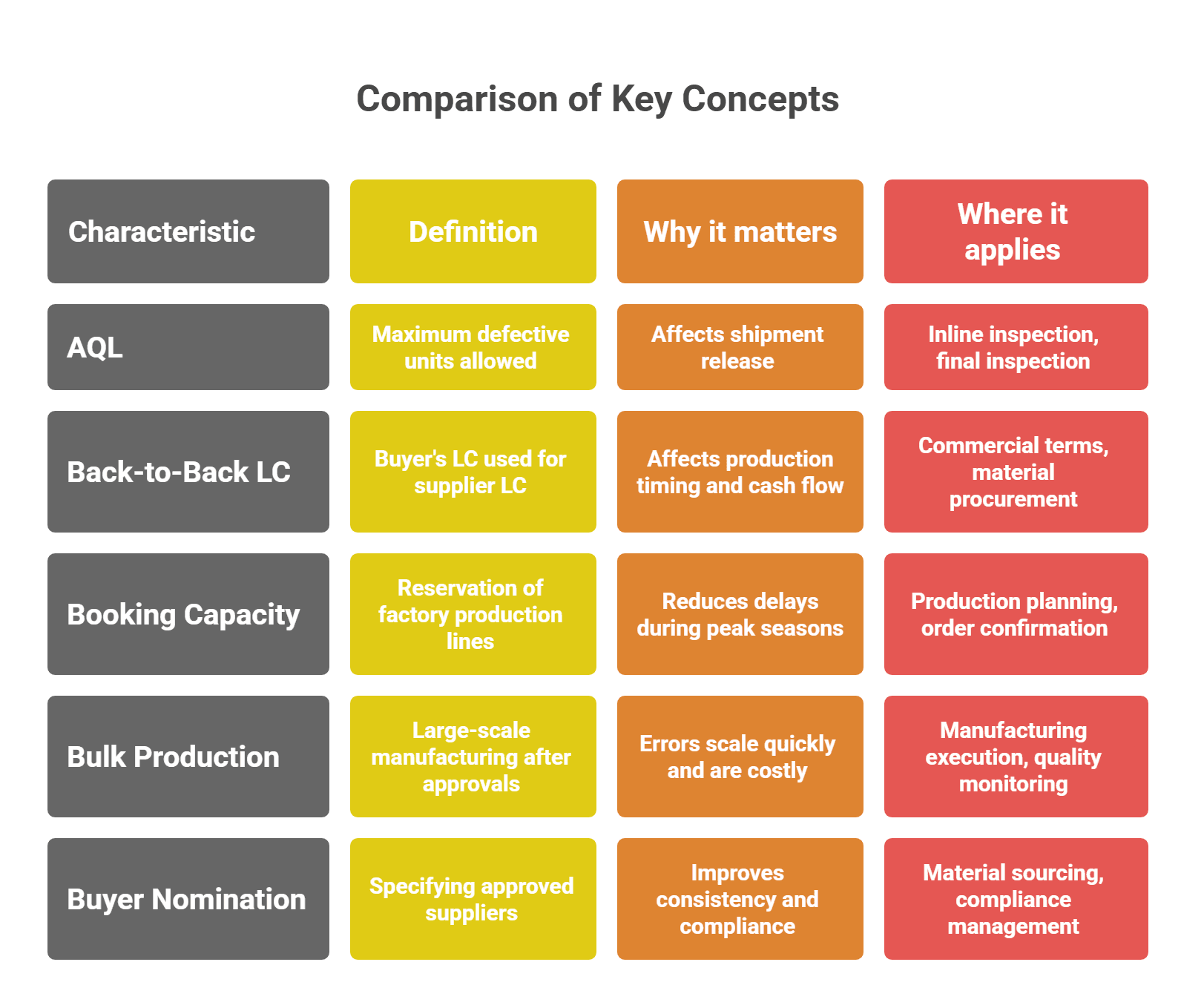
Introduction: What This Apparel Sourcing Glossary Is and How to Use It
Apparel sourcing terminology defines how buyers, suppliers, and manufacturers communicate cost, quality, lead time, and compliance throughout the production process.
Misunderstanding sourcing terms such as MOQ, FOB, AQL, or tech pack is one of the most common causes of delays, cost overruns, and quality disputes in apparel manufacturing.
This glossary explains the most important apparel sourcing terms every buyer must know, using clear definitions and practical context aligned with how sourcing decisions are made in real production environments.
This guide is designed to be referenced during supplier selection, RFQs, sampling approvals, production follow-ups, and quality inspections.
Table of contents
ShowHide- Introduction: What This Apparel Sourcing Glossary Is and How to Use It
- Apparel Sourcing Terms Explained: Definitions Buyers Use in Real Production
- AQL (Acceptable Quality Level)
- Back-to-Back LC
- Booking Capacity
- Bulk Production
- Buyer Nomination
- CAPA (Corrective and Preventive Action)
- CIF (Cost, Insurance, and Freight)
- Critical Path
- Cut-Make-Trim (CMT)
- Development Sample
- Ex-Factory Date
- Fabric Booking
- Fit Sample
- FOB (Free On Board)
- Greige Fabric
- Inline Inspection
- Lead Time
- Letter of Credit (LC)
- MOQ (Minimum Order Quantity)
- OTD (On-Time Delivery)
- PP Sample (Pre-Production Sample)
- Production Booking
- RFQ (Request for Quotation)
- Sample Approval
- SMETA
- Tech Pack
- TT (Telegraphic Transfer)
- Work-in-Progress (WIP)
- How Buyers Should Use This Apparel Sourcing Glossary
- Final Takeaway for Apparel Buyers
Apparel Sourcing Terms Explained: Definitions Buyers Use in Real Production
AQL (Acceptable Quality Level)
Definition:
AQL (Acceptable Quality Level) is a statistical quality control standard used to determine the maximum number of defective units allowed in a production batch during inspection.
Why it matters:
AQL determines whether a shipment passes or fails inspection and directly affects shipment release, rework, or rejection.
Where it applies:
Inline inspection, final inspection, shipment approval.
Back-to-Back LC
Definition:
A back-to-back LC is a financial arrangement where a factory uses a buyer’s Letter of Credit to open a secondary Letter of Credit with its fabric or trim suppliers.
Why it matters:
This structure affects production timing and cash flow, particularly in fabric-intensive programs.
Where it applies:
Commercial terms, material procurement, production planning.
Booking Capacity
Definition:
Booking capacity is the formal reservation of factory production lines for a specific order and time window.
Why it matters:
Orders placed without confirmed capacity booking are more likely to face delays during peak seasons.
Where it applies:
Production planning, order confirmation.
Bulk Production
Definition:
Bulk production is the large-scale manufacturing phase that begins after all samples, materials, and approvals are completed.
Why it matters:
Errors during bulk production scale quickly and are costly to correct.
Where it applies:
Manufacturing execution, quality monitoring.
Buyer Nomination
Definition:
Buyer nomination is the process of specifying approved fabric mills, trim suppliers, or service providers that factories must use.
Why it matters:
Nomination improves consistency and compliance but can affect cost and flexibility.
Where it applies:
Material sourcing, compliance management.
CAPA (Corrective and Preventive Action)
Definition:
CAPA is a documented action plan used to correct identified issues and prevent their recurrence following audits or inspections.
Why it matters:
Unclosed CAPAs can block future orders and damage supplier status.
Where it applies:
Compliance audits, quality systems.
CIF (Cost, Insurance, and Freight)
Definition:
CIF is a shipping term where the supplier covers cost, insurance, and freight until the goods reach the destination port.
Why it matters:
CIF simplifies logistics for buyers but reduces cost transparency and control.
Where it applies:
Commercial terms, logistics planning.
Critical Path
Definition:
The critical path is a timeline outlining every required step from design freeze to shipment delivery.
Why it matters:
Delays at early stages of the critical path compound and threaten on-time delivery.
Where it applies:
Planning, lead time management.
Cut-Make-Trim (CMT)
Definition:
CMT is a manufacturing model where the factory performs cutting, sewing, and finishing while the buyer supplies materials.
Why it matters:
CMT provides buyer control but increases operational complexity.
Where it applies:
Production models, cost structuring.
Development Sample
Definition:
A development sample is an early prototype used to test garment construction, design intent, and feasibility.
Why it matters:
Development samples influence cost, lead time, and manufacturability decisions.
Where it applies:
Product development, sampling.
Ex-Factory Date
Definition:
The ex-factory date is the date when finished goods leave the factory premises.
Why it matters:
Ex-factory timing is a key milestone for delivery tracking and penalties.
Where it applies:
Logistics coordination, delivery KPIs.
Fabric Booking
Definition:
Fabric booking is the reservation or advance purchase of fabric before final order confirmation.
Why it matters:
Late fabric booking is one of the most common causes of production delays.
Where it applies:
Material planning, lead time control.
Fit Sample
Definition:
A fit sample is a garment sample used to assess sizing, proportions, and wearability.
Why it matters:
Fit approval is a mandatory gate before bulk production can proceed.
Where it applies:
Sampling, design approval.
FOB (Free On Board)
Definition:
FOB is a shipping term where the supplier is responsible for goods until they are loaded onto the export vessel.
Why it matters:
FOB provides buyers with greater cost transparency and logistics control.
Where it applies:
Commercial terms, freight management.
Greige Fabric
Definition:
Greige fabric is unfinished fabric that has not yet been dyed or treated.
Why it matters:
Greige booking improves flexibility and shortens lead times for repeat programs.
Where it applies:
Fabric strategy, speed-to-market.
Inline Inspection
Definition:
Inline inspection is quality inspection conducted during production rather than at the end.
Why it matters:
Inline inspection allows early detection of defects before large volumes are affected.
Where it applies:
Quality assurance, production monitoring.
Lead Time
Definition:
Lead time is the total time from order confirmation to delivery.
Why it matters:
Lead time determines calendar feasibility and selling window length.
Where it applies:
Planning, sourcing strategy.
Letter of Credit (LC)
Definition:
A Letter of Credit is a bank-issued guarantee of payment to a supplier upon meeting agreed conditions.
Why it matters:
LCs reduce supplier risk but add administrative time.
Where it applies:
Payment terms, commercial structure.
MOQ (Minimum Order Quantity)
Definition:
MOQ is the minimum quantity a supplier requires to accept a production or material order.
Why it matters:
MOQs influence supplier selection, unit cost, and feasibility of small orders.
Where it applies:
Costing, supplier negotiation.
OTD (On-Time Delivery)
Definition:
OTD is a performance metric measuring whether shipments are delivered according to the agreed schedule.
Why it matters:
Poor OTD performance leads to stock delays and markdown exposure.
Where it applies:
Supplier KPIs, delivery tracking.
PP Sample (Pre-Production Sample)
Definition:
A PP sample is the final approved garment sample that defines the standard for bulk production.
Why it matters:
Bulk production quality is measured against the PP sample.
Where it applies:
Production approval, quality control.
Production Booking
Definition:
Production booking is the formal confirmation of factory capacity for an order.
Why it matters:
Unbooked production increases the risk of delays and line conflicts.
Where it applies:
Manufacturing planning.
RFQ (Request for Quotation)
Definition:
An RFQ is a formal request sent to suppliers asking for price, lead time, and commercial terms.
Why it matters:
Clear RFQs enable accurate comparison and negotiation.
Where it applies:
Costing, supplier selection.
Sample Approval
Definition:
Sample approval is formal confirmation that a sample meets buyer requirements.
Why it matters:
Approval gates prevent unapproved changes entering bulk production.
Where it applies:
Sampling, production readiness.
SMETA
Definition:
SMETA is a widely used social audit methodology under the Sedex platform.
Why it matters:
SMETA reports are often required for ethical sourcing compliance.
Where it applies:
Compliance audits, supplier approval.

Tech Pack
Definition:
A tech pack is a technical document specifying garment measurements, materials, construction, and quality standards.
Why it matters:
The tech pack is the foundation of accurate costing, sampling, and production.
Where it applies:
Design handover, sourcing execution.
TT (Telegraphic Transfer)
Definition:
TT is a direct bank-to-bank payment method used in international trade.
Why it matters:
TT is faster than LC but exposes buyers to higher payment risk.
Where it applies:
Payment terms.
Work-in-Progress (WIP)
Definition:
Work-in-Progress refers to garments currently being manufactured but not yet completed.
Why it matters:
WIP visibility helps identify bottlenecks early.
Where it applies:
Production monitoring.
How Buyers Should Use This Apparel Sourcing Glossary
This apparel sourcing glossary should be used as a reference during supplier negotiations, sampling approvals, production follow-ups, and quality inspections.
Buyers should standardise these definitions internally and ensure suppliers apply the same terminology to reduce miscommunication and execution risk.
Final Takeaway for Apparel Buyers
Apparel sourcing terminology is not theoretical language. It directly determines how cost, quality, lead time, and compliance are interpreted and executed across the supply chain.
Buyers who master sourcing terminology communicate more clearly, identify risks earlier, and maintain stronger control over production outcomes.
FAQ Section
If your brand is seeking a reliable apparel sourcing partner with access to Tier 1 and mid-tier factories in Bangladesh, Epsilon Global Sourcing provides:
End to end apparel sourcing service
Factory capability matching
Transparent costing breakdown
Compliance and audit oversight
Multi stage quality control
LC and documentation handling
Production tracking and reporting
Contact us to discuss your sourcing needs and strengthen your supply chain with a high performing Bangladesh apparel sourcing team.